
Consumer
This guide is a complete reference on flush doors. It covers what a flush door is, how it is made, the main types, standard sizes and thickness, indicative prices in India and how a flush door compares with panel, WPC and PVC doors. It closes with buying tips, installation and care advice, the mistakes to avoid and the flush door range from CenturyDoors.
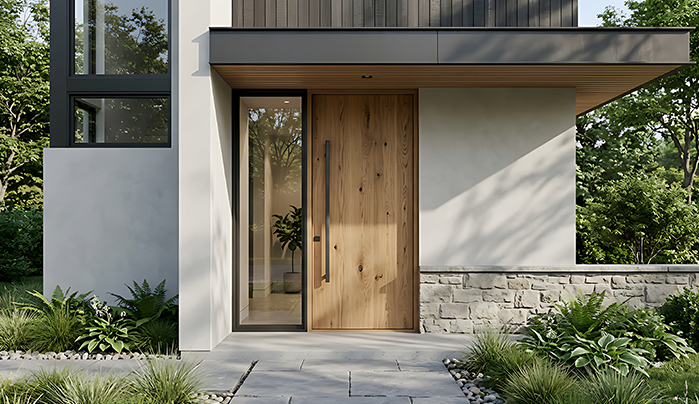
The door is flat and smooth with a plain surface on both sides. There are no raised or carved panels. Bonding of plywood, veneer or laminate face sheets is done over a timber frame filled with a solid or hollow core. It looks clean and modern because the face sits level with the frame. Such doors are the most common types in Indian homes and offices today.
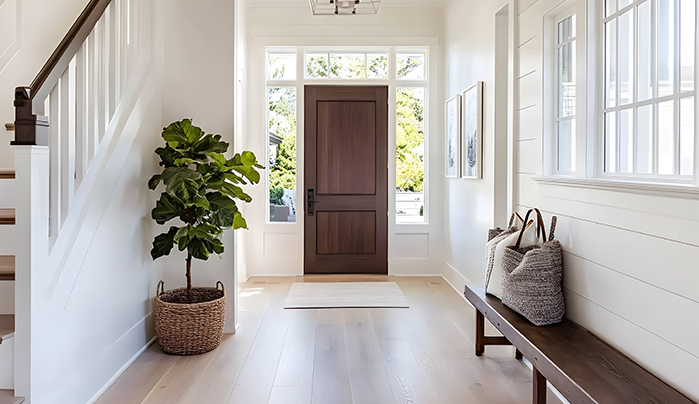
The flush door is a modern idea. It arrived in the early twentieth century, alongside a design movement that favoured plain surfaces over heavy carving. As factory-made plywood spread, the flat door became easy to produce at scale.
In India, flush doors grew popular from the 1970s and 1980s. It happened as the plywood industry expanded. They replaced solid timber and ornate panel doors in most new homes because they cost less, weighed less and suited the simpler interiors people were starting to prefer. Today they are the default choice for bedrooms, offices and modern flats.
A flush door is made in layers. A frame of seasoned timber, called stiles and rails, forms the outer border. Inside it sits the core, either solid wood battens and fillers or a lighter hollow lattice. Face panels of plywood or MDF are then bonded to both sides with adhesive and the whole assembly is pressed under heat and pressure so it bonds into a single flat slab.
Good manufacturing shows in the details. At CenturyPly, the timber is kiln-dried to remove moisture, then given a three-tier chemical treatment across lumber, face and core to guard against borers and termites. The slab is sanded on both sides for a clean bonding surface and the four edges are machine trimmed for accuracy. CenturyDoors also carries patented Glue Line Internal Protection, which adds a further layer of defence against pests.
A flush door has a simple look, but its construction makes it a practical choice for everyday use. Key properties include:
Flush doors are grouped in two ways: by core and by finish.
By core
By finish
CenturyDoors covers all of these, from plain Sainik Doors to decorative Century Laminated Doors and Century Veneered Doors.
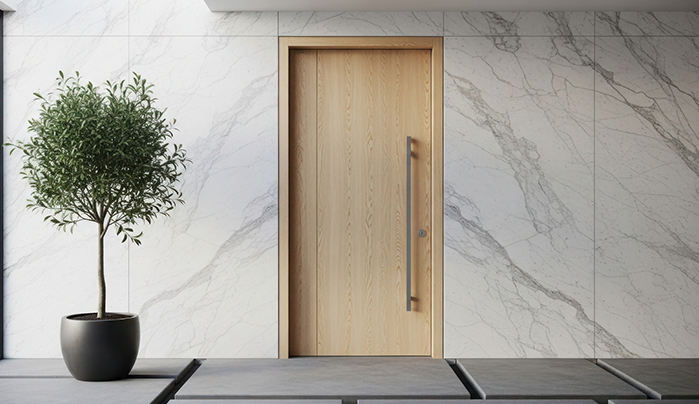
Flush doors work almost everywhere inside a building. Flush doors are versatile enough for both residential and commercial spaces. Their clean appearance, easy maintenance and range of finishes make them suitable for different rooms and levels of daily use.
| Point | Flush Door | Panel Door |
|---|---|---|
| Surface | Flat and smooth | Raised or recessed panels |
| Look | Modern, minimal | Traditional, decorative |
| Cleaning | Wipes clean easily | Dust settles in grooves |
| Cost | Usually lower | Usually higher |
A flush door suits modern interiors and busy homes. A panel door suits a classical look where the carving is the point.
A WPC door is made of wood plastic composite, so it is fully waterproof and immune to termites. That makes it a strong pick for bathrooms and other wet areas. A flush door gives a warmer, more natural wood feel and a wider choice of finishes and a good waterproof flush door handles daily moisture well. Many homes use both: WPC where water is constant, flush doors everywhere else. CenturyPly makes WPC boards for exactly these wet zone jobs.
A PVC door is fully plastic, the cheapest option, light and completely waterproof. It works for bathrooms and utility spaces, but it feels less solid, offers less strength and can sag over wider openings. A flush door is far stronger and steadier, which is why it stays the choice for bedroom and main doors while PVC is kept to small wet rooms.
The standard flush door in India is about 7 feet tall and 3 feet wide, which fits most doorways. Common sizes run as below.
| Use | Typical Size (Width x Height) | Thickness |
|---|---|---|
| Bathroom | 28 in to 30 in x 78 in | 30 mm to 35 mm |
| Bedroom | 30 in x 78 in to 80 in | 30 mm to 35 mm |
| Main entrance | 36 in to 38 in x 80 in to 84 in | 38 mm to 40 mm |
| Commercial | 32 in to 36 in x 80 in to 84 in | 40 mm and above |
CenturyDoors ranges are offered from 25 mm up to 40 mm, so there is a thickness for a light internal door and for a solid main door alike. As a rule, a thicker door shuts with a heavier, quieter sound and holds hardware better.
When choosing a flush door, focus on the features that indicate its quality and durability:
Flush doors are popular because they are practical, durable and easy to maintain. Their engineered construction and range of finishes also make them suitable for different rooms and interiors.
Flush door prices depend on four things:
Change any one and the price moves. As a broad indication for 2026, plain flush doors sit at the affordable end, laminated and veneer decorative doors in the middle and premium solid core waterproof doors at the top. Per door figures in the market commonly range from a few thousand rupees for a standard internal door to well over fifteen thousand for a large premium main door. Buying a readymade door in a standard size almost always costs less than a custom size.
CenturyDoors’ Sainik Doors are priced at approximately ₹2,318–₹3,993 per sheet. This range provides a useful benchmark for standard flush door sheets, although the final cost can vary based on size, thickness, grade, finish, location and applicable taxes or dealer pricing.
The right flush door depends on the room, level of use and look you want. Keep these factors in mind before you buy:
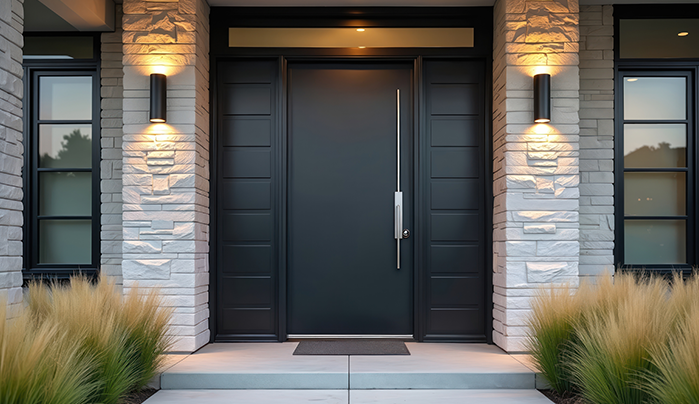
Good fitting protects a good door.
Flush doors ask for little.
A laminated or veneer face keeps its look for years with nothing more than regular dusting.
The frequent mistakes are simple ones.
Once you have shortlisted a flush door, a few simple checks can help you make the right purchase:
CenturyDoors, from the house of CenturyPly, offers a flush door for every budget and room.
For a decorative face, the range extends to:
A flush door is the flat, smooth, dependable door behind most modern interiors. It gives you strength, a clean look and easy care at a fair price, which is why it has become the standard across Indian homes and offices. Once you know the core grades, the sizes and the finishes, the choice is straightforward. To see finishes against your own walls, try the Design Navigator on centuryply.com, or call 1800-5722-122 to talk through the CenturyDoors range.
A flush door has a smooth, flat surface with a core engineered for stability and durability. A “normal door” is a broader term that can include panel, moulded or solid-wood doors. Flush doors generally offer a cleaner look, easier maintenance and greater consistency.
It is called a flush door because its surface is completely flat and smooth, with no raised or recessed panels or mouldings. The face of the door sits flush across the frame of the shutter.
Yes, flush doors are waterproof. They are resistant to water whether you install them in bath spaces or those exposed to rain.
A flush door is made of a timber frame with a solid or hollow core inside, faced on both sides with plywood or MDF and bonded under heat and pressure. The outer face can then be finished with laminate, veneer or paint.
Choose a waterproof grade, marked BWP or BWR, since it holds together in damp conditions. A WPC door is another good option for a constantly wet bathroom. For everyday use, Sainik Doors are built for moisture prone spaces like kitchens and wardrobes.
A good waterproof flush door can last for decades if it is fitted and sealed properly. Warranty is a useful guide and CenturyDoors ranges run from 5 years on affordable models up to 30 years on Club Prime Doors.
Loading categories...


