
Consumer
At the furniture-making consultation, a customer usually asks about the design, the finishing material, and the colour of the furniture. However, one practical factor that rarely comes up is the thickness of the board.
A wardrobe may hold the owner's outfit, a dining table will be used every day, a bookshelf can be full of heavy books, etc.; these pieces of furniture have various requirements, so the same thickness of material applied to every part of the furniture would seem quite inappropriate.
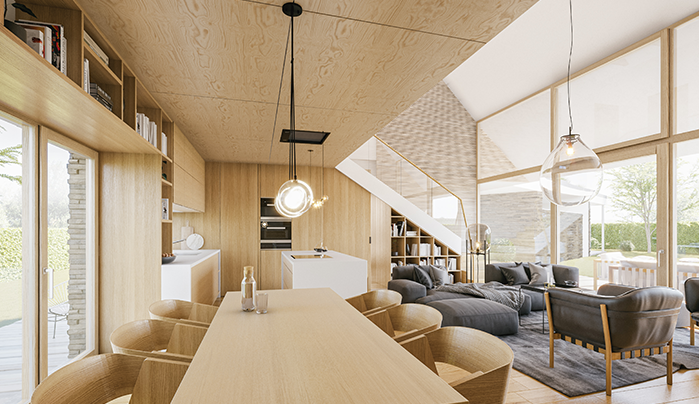
Certainly, one can make the right choice of thickness without too much difficulty. One simply has to think about the furniture, the kind of load the furniture will carry and the way it is constructed. Here you will find some very practical hints that can help you to make the right decision.
The thickness of a plywood sheet determines mainly how stiff and strong it will be. A thin sheet may work well as a bottom panel of a drawer but will certainly not be a good option for a dining table top or a wardrobe shelf heavily loaded with clothes.
And yet the idea of getting the thick ply for every corner of your furniture is not that good. The extra weight and cost may not come with extra benefits.
A more clever and cost-effective idea is to choose the appropriate thickness material according to the requirement.
For instance, the main frame parts or a wardrobe will be best done in 16-19 mm plywood, while the back panel will not need that thick. In the same way, a thick top is a must for a dining table, while the exact figure is going to depend on the table length and the supports below.
So, choosing and using the proper thickness plywood is important because you will get just the right durability but at the same time avoid extra weight, expense, and unnecessary over-engineering.
Let's look at some of the most common furniture applications.
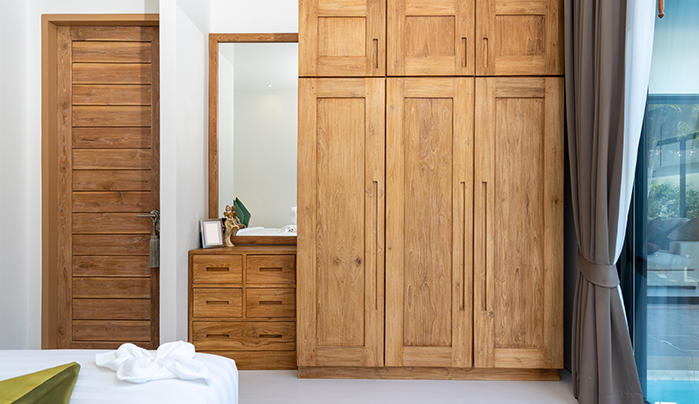
Wardrobes need to remain sturdy even after years of opening, closing and loading. The shutters also need to hold hinges and other hardware securely.
For most wardrobes, 16-19 mm plywood is a practical choice for shutters, sides and major structural components. Shelves that will carry heavier items can also benefit from 18-19 mm material.
A thinner sheet, such as 6-9 mm, may be appropriate for the back panel when the furniture design does not require it to carry a significant load.
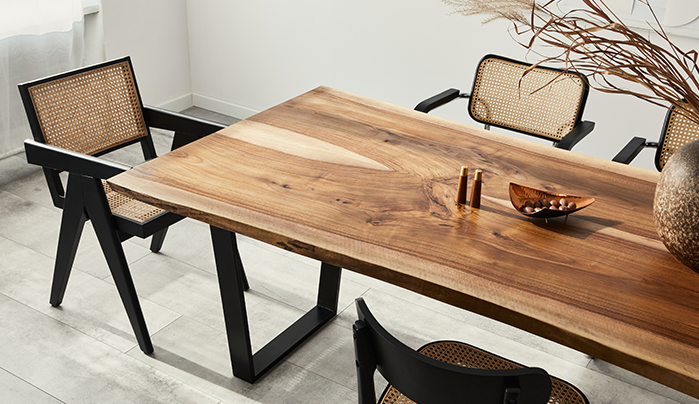
A dining table needs a firm and stable surface because it is used every day and may need to support crockery, serving dishes and other objects.
For a typical dining table, 18-19 mm plywood can be a suitable starting point. However, the size of the tabletop and the support provided underneath it also matter.
A long tabletop with inadequate support may flex even when a thicker sheet is used. So, the carpenter or furniture designer should consider the complete construction rather than looking at thickness alone.
A bed has to deal with continuous weight and movement, making strength particularly important.
For a standard bed frame, 18 mm plywood is generally a practical choice. Storage beds, hydraulic beds or designs with larger unsupported sections may require 19 mm or another suitable specification based on their construction.
The plywood grade matters here as well. If the furniture is likely to encounter higher moisture, choosing an appropriate moisture-resistant grade is important.
Kitchen furniture goes through plenty of daily use. It can also be exposed to humidity, spills and occasional water.
For cabinet carcasses and other major structural components, 16-19 mm plywood is commonly suitable. Back panels can often use 6-9 mm plywood, depending on the design.
For kitchens, do not choose plywood based on thickness alone. The grade should match the environment. BWP (Boiling Water Proof) plywood can be considered for areas where greater moisture protection is required.
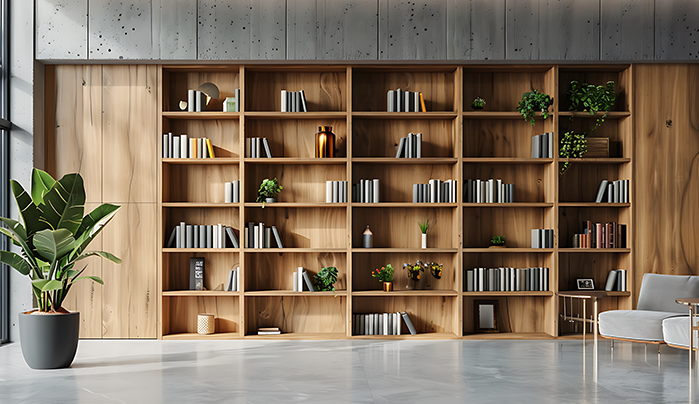
Books may look harmless, but a fully loaded bookshelf can become surprisingly heavy.
For regular bookshelves, 18-19 mm plywood is a practical choice. However, shelf length is equally important. A very long shelf without adequate support can bend under load even if the material is reasonably thick.
If the design has long spans, additional supports can make a significant difference.
A study table may need to support a laptop, monitor, books, stationery and other everyday items.
For most home study tables and work desks, 18-19 mm plywood can provide a sturdy working surface. The supporting framework underneath should also be properly designed, particularly for wider tables.
Not every part of furniture needs heavy plywood.
Drawer bottoms and back panels generally carry less weight than shutters, shelves or tabletops. Depending on the construction, 6-9 mm plywood can be suitable for these components.
Using an appropriate thinner sheet can also help keep the furniture lighter.
If you are looking for a quick reference, this table can help:
| Furniture | Commonly Suitable Thickness | Key Consideration |
|---|---|---|
| Wardrobe shutters | 16-19 mm | Rigidity and hardware support |
| Wardrobe shelves | 18-19 mm | Load-bearing capacity |
| Dining table | 18-19 mm | Table size and underside support |
| Bed frame | Around 18-19 mm | Weight and movement |
| Kitchen cabinets | 16-19 mm | Daily use and moisture exposure |
| Bookshelves | 18-19 mm | Shelf length and load |
| Study/work table | 18-19 mm | Surface size and support |
| Drawer bottoms | 6-9 mm | Lower load |
| Back panels | 6-9 mm | Non-load-bearing construction |
These are practical guidelines rather than fixed rules. Furniture dimensions, design, joinery and expected load can change the final specification.
Not really.
It is easy to assume that a thicker sheet will automatically make better furniture. But furniture is a combination of materials, design and construction.
Imagine using 25 mm plywood for every component of a wardrobe. You may get a very sturdy piece of furniture, but you could also end up paying more and adding unnecessary weight.
On the other hand, using 6 mm plywood for a large shelf that is expected to carry heavy books is unlikely to deliver the required rigidity.
A simple way to look at it is:
| Requirement | Possible Approach |
|---|---|
| Light-duty component | 6-9 mm |
| Medium-duty component | 12-16 mm |
| Heavy-use furniture | 16-19 mm |
| Special heavy-duty construction | 19 mm or thicker, if required by design |
The important word here is “possible.” The final specification should always be based on the furniture's actual design and load.
Choosing the right sheet involves more than checking the number printed on it.
The environment in which the furniture will be used matters. Bedroom and living-room furniture may have different requirements from kitchen furniture.
For areas exposed to greater moisture, BWP (Boiling Water Proof) plywood can be considered.
Furniture is a long-term investment, so protection against borer and termites is another important consideration when selecting plywood.
A well-designed piece of furniture can make better use of a suitable thickness. Support, joints, shelf spans and hardware all influence the finished product.
Warranty options are what ensure that you have invested in a genuine, durable product.
CenturyPly’s Club Prime comes with a Total Cover warranty that provides extended protection for the first 10 years after purchase. It covers all ancillary costs related to manufacturing defects, warping issues, materials, and site transportation. This is in addition to the 30-year warranty that the product typically carries, ensuring comprehensive protection.
Consistency matters. A reliable manufacturer can give you greater confidence that the plywood meets the stated specifications and performs consistently across your furniture project.
CenturyPly offers plywood in different grades and thicknesses, allowing homeowners and professionals to select products according to the requirements of their furniture.
The right product should be selected based on more than just thickness. Depending on the application, factors such as moisture protection, borer and termite protection, strength and warranty should also be considered.
Where relevant, CenturyPly's Total Cover Warranty can provide an added layer of assurance when selecting its plywood products.
The key is not to automatically choose the thickest sheet available. Instead, select a suitable product and specification for the particular furniture you are making.
In most day-to-day furniture making, a thickness of 16-19 mm can be a good size for large furniture parts like chair and table frames, whereas smaller parts like back panels and drawer bottoms might be best served by the thinner 6-9 mm sheets. But depending on design, materials, and purpose, other thicknesses may be preferred.
The main thing is that the selection should reflect the size, loading, construction method as well as location of the piece of furniture being built. It is better to discuss it with your carpenter or a professional interior expert for the accurate specification. A bit of time spent at the planning stage can definitely result in a well-designed and durable furniture product that gives satisfaction over a long time and that you can rely on to remain sturdy.
For many furniture applications, 16-19 mm plywood is commonly suitable. The exact requirement depends on the furniture design, size and expected load.
16-19 mm plywood is commonly suitable for wardrobe shutters, sides and major structural components. Back panels can use thinner plywood depending on the design.
18-19 mm plywood can be suitable for a typical dining table. The tabletop's size and supporting structure should also be considered.
Yes. 12 mm plywood can be suitable for selected furniture components, depending on the design and load. It may not be the preferred choice for every heavy-duty application.
No. The correct thickness depends on the furniture's design, load, dimensions and construction. Using unnecessarily thick plywood can add cost and weight without providing a practical advantage.
Around 18-19 mm plywood is commonly suitable for many bed components. Storage or hydraulic bed designs may require a different specification depending on their construction.
Loading categories...


