
Consumer
Choosing the right plywood is important when the material has to perform under demanding construction conditions. Concrete work, in particular, requires plywood that can handle moisture, pressure, and repeated use without losing its shape.
That is where shuttering plywood comes in. It is made specifically for concrete formwork, where it acts as a temporary mould until the concrete sets. Ordinary plywood, meanwhile, is generally used for furniture, doors, cabinets, and interior applications.
So, what exactly makes shuttering plywood different? And when should you choose it over ordinary plywood? Let’s look at it in simple terms.
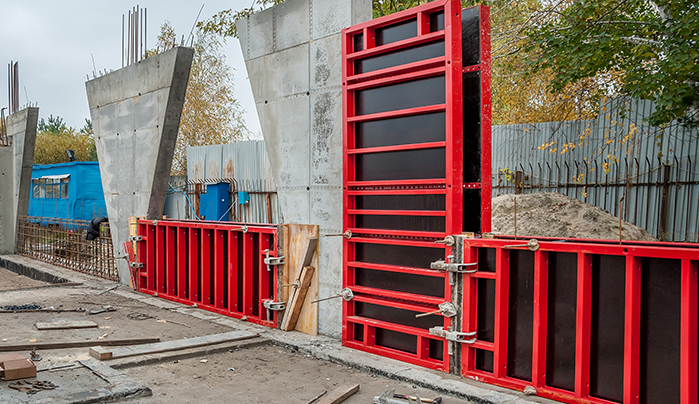
Shuttering plywood is a kind of construction-grade plywood that is used to create temporary formwork for concrete. When concrete in a wet state is poured, formwork ensures that it holds the desired shape until it gets firm enough.
It is just like a temporary mould. One has to ensure that the formwork doesn't give way at any point under the weight and moisture of the wet concrete.
That is also the reason why it is not advisable in any way to consider ordinary plywood as an alternative.
Gluing layers of wood veneers basically manufactures the product. In addition to this, products specially designed for shuttering may also have surface treatments that facilitate easier concrete demoulding.
A quality product typically focuses on:
In India, plywood used for concrete shuttering is covered under IS 4990, which specifies requirements for plywood used in concrete shuttering work.
Ordinary plywood is a general-purpose material used across furniture and interior applications. Depending on its grade and specifications, it can offer different levels of strength and moisture protection.
You will commonly find it in:
The important thing to remember is that plywood should be selected according to its intended application. A plywood that works well for furniture does not automatically become suitable for concrete formwork.
The easiest way to understand the difference is to compare what each type is designed to do.
| Feature | Shuttering Plywood | Ordinary Plywood |
|---|---|---|
| Main purpose | Concrete formwork | Furniture and interior applications |
| Designed for | Wet concrete and construction conditions | General-purpose woodworking |
| Moisture performance | Boiling Water Proof options are available | Depends on the grade |
| Surface requirement | Designed to support concrete finishing and demoulding | Usually intended for finishing, polishing or laminating |
| Load conditions | Designed for the demands of concrete formwork | Depends on the specific plywood grade |
| Reuse | Can be reused with proper care | Not intended for repeated concrete formwork |
| Typical use | Columns, beams, slabs and other concrete structures | Furniture, cabinets, doors and interiors |
The difference, therefore, is less about which plywood is universally “better” and more about which one is appropriate for the job.
Using general-purpose plywood for concrete formwork can lead to problems if the material is not designed to handle the moisture, pressure, and working conditions involved.
Below are the benefits of shuttering plywood:
Concrete contains a considerable amount of water when it is poured. Boiling Water Proof plywood is designed to maintain its bonding performance when exposed to demanding wet conditions.
This makes it better suited to concrete formwork than plywood intended only for dry interior applications.
During concrete pouring, the formwork needs to hold its shape. Construction-grade plywood is designed with the strength and stability needed for this purpose.
The correct plywood, combined with proper structural support, helps the formwork remain stable while the concrete sets.
The surface of the formwork has a direct impact on the appearance of the concrete after demoulding.
A suitable, smooth plywood surface can help create a cleaner finish and make the removal of the formwork easier.
One practical advantage is the possibility of reuse. If the sheets are cleaned properly after use and stored correctly, they can potentially be used for multiple formwork cycles.
However, the actual number of uses depends on the product, handling, storage conditions, site practices, and the condition of the sheets.
A reliable formwork material can make concrete work easier to manage. When the plywood performs consistently, contractors can spend less time dealing with damaged sheets, poor finishes, or premature replacement.
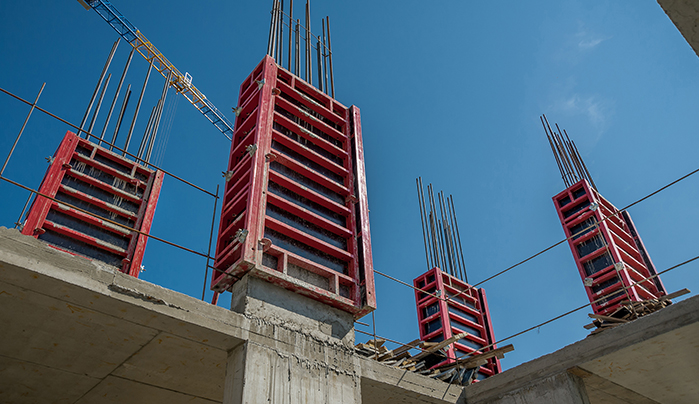
The primary purpose of this plywood is concrete formwork. It can be used wherever temporary moulds are required to shape concrete.
| Application | Purpose |
|---|---|
| Columns | Helps create the required shape and dimensions of concrete columns |
| Beams | Used to form the sides and underside of concrete beams |
| Slabs | Used as part of temporary formwork during slab construction |
| Concrete structures | Supports different formwork requirements during concrete work |
| Construction projects | Suitable for formwork requirements in residential and commercial construction |
The required thickness and support arrangement should be decided according to the project's structural design and load requirements.

Buying the right sheet involves more than checking its price. Before purchasing, consider these factors:
Look for products manufactured according to the relevant standards for concrete shuttering. This gives you a better indication that the plywood has been developed for the intended application.
The required thickness depends on factors such as concrete pressure, support spacing, formwork design, and the requirements of the project. There is no single thickness that works for every construction site.
Since the plywood comes into contact with wet concrete, moisture performance is particularly important. Boiling Water Proof plywood is designed for demanding wet conditions.
A suitable surface can help with concrete demoulding and contribute to a smoother concrete finish.
Construction materials need consistency. Choosing a manufacturer with established quality standards can help reduce uncertainty when the material is being used on demanding sites.
CenturyPly's Century Film Face is a construction-focused plywood designed for shuttering applications. According to CenturyPly, the product is Boiling Waterproof and available in 12 mm thickness, with 30 kg and 34 kg variants.
Its specifications include water absorption below 5%, glue-line protection, and specified values for static bending strength and modulus of elasticity.
For a project requiring plywood specifically designed for concrete formwork, a product such as Century Film Face can therefore be considered instead of using general-purpose plywood.
Shuttering and ordinary plywood share their raw materials, wood veneers, yet differ in their uses. Ordinary plywood is the go-to for making furniture, cabinetry, doors, and other indoor items, whereas shuttering plywood is tailored for the harsher environment of concrete formwork, where performance against wetness, strength, and the appearance of the surface, as well as whether it can be reused or not.
Homeowners and contractors using a mix of both can choose high-quality ordinary plywood such as CenturyPly’s Club Prime for simple furniture building. A Boiling Waterproof Grade plywood, it comes with a Total Cover warranty which offers extended protection. It covers manufacturing defects, swelling and warping issues, loss of glue strength and a slew of other plywood-related issues if spotted within the first ten years of purchase.
However, if your project is a concrete construction, you shouldn't rely on using off-the-shelf regular lumber as a replacement for shuttering grade one. Getting the right product for the job will help you get it done the right first time, and the result will likely be a cleaner and well-organised construction.
It is used to create temporary formwork that holds wet concrete in the required shape while it sets. Common applications include columns, beams, slabs, and other concrete structures.
Boiling Water Proof variants are designed to withstand demanding wet conditions associated with concrete construction.
Not necessarily. Ordinary plywood is designed for general-purpose applications. Concrete formwork requires plywood that is specifically suitable for handling moisture and construction loads.
Yes. It can be reused when properly handled, cleaned, maintained, and stored. The number of reuse cycles depends on the product and site conditions.
The main difference is their intended application. Shuttering plywood is designed for concrete formwork, while ordinary plywood is generally used for furniture, doors, cabinets, and interior applications.
Check the applicable standard, thickness, Boiling Water Proof performance, surface quality, product specifications, and manufacturer's recommendations before making a purchase.
Loading categories...


