
Consumer
The home is no longer just a place to sleep and eat. It is now an office, a gym, a classroom, a café, and a living space, often all in the same day. Daily routines have shifted dramatically, and we are now asking the spaces we live in to do far more than they were ever designed for.
Designers across India are responding to this shift in a practical, thoughtful way, and the material choices they are making are just as important as the layout decisions.
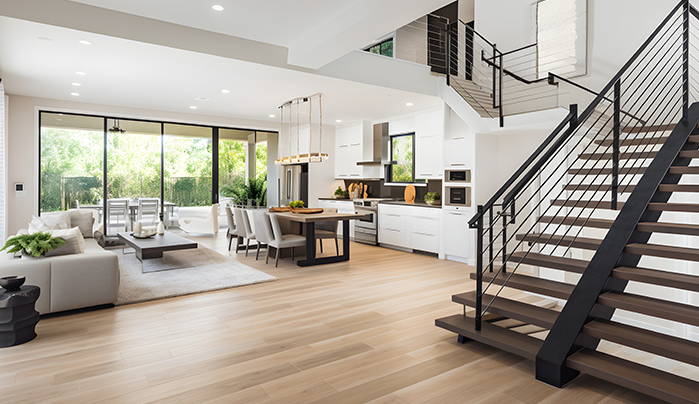
A few years ago, a spare room was simply a spare room. Today, it is a home office in the morning, a study space for children in the afternoon, and a guest room on weekends. The living room functions as a workout zone before breakfast and an entertainment space in the evening.
This shift has forced designers to think differently, not about aesthetics first, but about function, flexibility, and longevity. For many homeowners today, a beautiful home that cannot adapt to changing routines may no longer be enough.
One of the most common briefs designers receive today is the request for a workspace that does not look like one. Homeowners want the productivity of an office without the visual weight of one.
The solution designers are turning to: plywood-based fold-away desks, wall-mounted workstations, and built-in cabinetry that conceals the workspace entirely when the workday ends. These are not just clever tricks; they require plywood that can bear repeated use, hold screws and hinges firmly, and resist the wear of daily operation without warping or losing shape.
Plywood panelling is also being used to visually zone hybrid rooms. A textured panel behind a desk area signals "work mode", while a smoother finish behind the sofa area signals rest, without a single partition in sight.
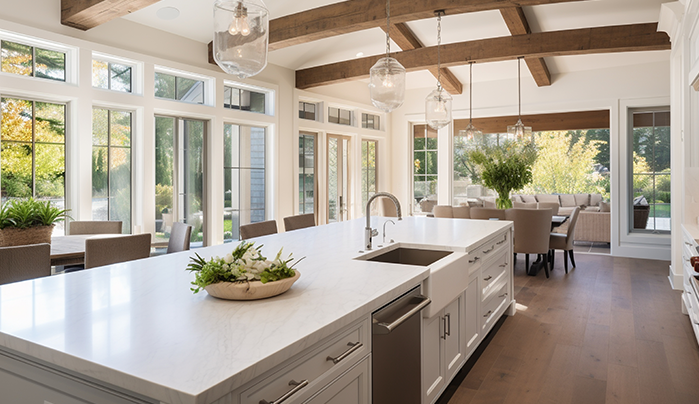
With more people cooking at home than ever, the kitchen is now the most-used room in the house. Designers are rethinking kitchen layouts not just for occasional cooking, but for daily, intensive use across multiple meals.
This means kitchen cabinetry needs to be genuinely Boiling Water Proof, not just moisture-tolerant. It needs to be Borer and Termite Proof so that pest damage does not silently compromise cabinets over the years. And in a space where open flames and electrical appliances are constantly in use, plywood with Firewall Technology is increasingly a design standard rather than a premium add-on.
Hygiene has become a key consideration in modern kitchen design. Surfaces featuring technologies designed to help inhibit microbial growth, rather than just being easy to wipe, are what designers are specifying for modern kitchen cabinetry.
The bedroom is no longer purely a space for rest. It has become a reading room, a dressing room, a personal study, and in many homes, a private space for video calls. Wardrobes are being designed with built-in desks and vanity units to serve multiple functions without crowding the room.
Designers are specifying plywood wardrobes with matte laminate finishes, sliding doors, and modular internal fittings, all of which require a stable, dimensionally consistent base material that does not deform under load or warp over time in the humidity that Indian bedrooms routinely experience.
Adaptive design works best when the materials behind it perform consistently over time. A fold-away desk that warps loses its function. A kitchen cabinet that begins to delaminate quickly loses its appeal. Likewise, a wardrobe that fails to maintain its form under load can diminish the impact of even the most thoughtful design choices.
This is why the shift in how people use their homes is also driving a shift in the materials designers choose. Flexibility in design demands reliability in material, and plywood, when chosen well, delivers both.
For spaces that need to do more, the plywood behind the design needs to work harder. CenturyPly's range is designed to support these requirements.
Both products are Borer and Termite Proof and available across a full range of thicknesses, from 4 mm to 25 mm, making them adaptable to every design need, from slim wall-mounted panels to heavy-duty cabinetry.
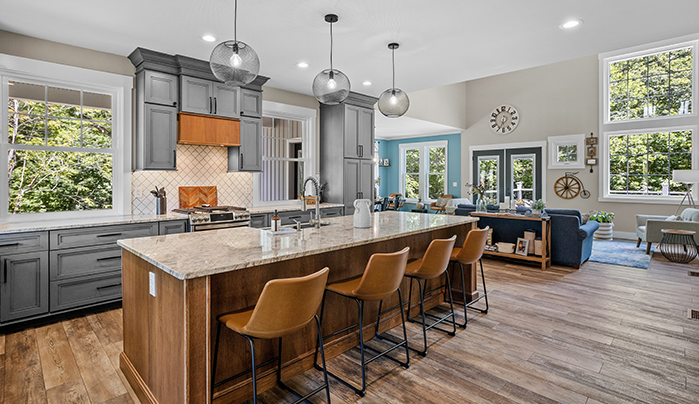
The homes of today look different from what they were even five years ago, not because of design trends, but because of how people actually live. Designers who understand this are specifying materials that flex with those changes: plywood that holds its shape, resists moisture and pests, stays hygienic, and carries warranties long enough to match the longevity of the furniture it builds. CenturyPly's range is designed for homes with these evolving needs.
Loading categories...


