
Consumer
What is wood veneer? You must have heard the word "wood veneer” quite often when planning interiors. It shows up everywhere: furniture, wall panels, and cabinets.
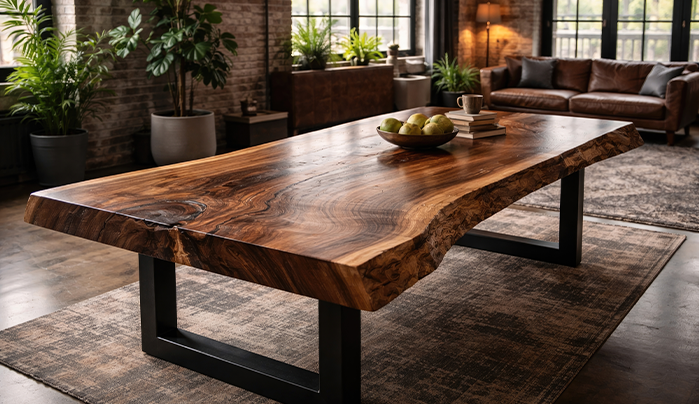
But what exactly is it, and why is everyone talking about it? This blog is going to clear that up for you. From what wood veneer is to how it compares with laminate and solid wood to where you should actually use it, everything is covered here. If you are planning furniture or redesigning your space, this guide will help you make clear and smart decisions.
Wood veneer is basically a very thin slice of real wood that gets attached to another surface like plywood. So what you see on top is actual wood. Not a print. Not a fake finish. Real grain, real texture.
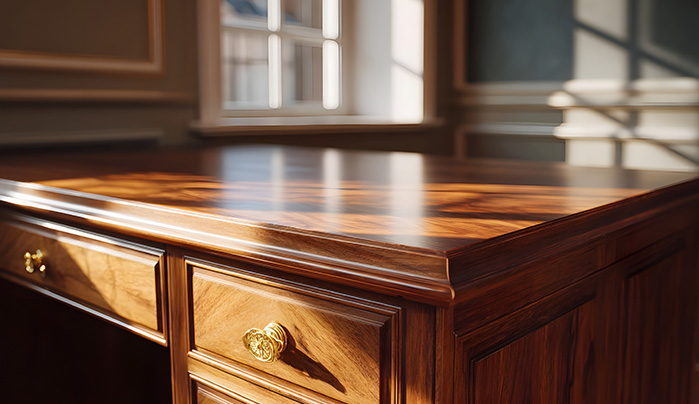
But underneath, it is supported by a stronger base. That is what makes it practical. You get the look of solid wood without the weight or cost that usually comes with it.
If you have ever seen furniture that looks rich but doesn’t feel bulky, chances are it is made using wood veneer. It is widely used today because it solves a simple problem. People want natural finishes, but they also want durability and easier maintenance. Veneer helps balance both!
One thing people don’t always realise is how thin the veneer actually is. Most sheets fall somewhere in between:
That thinness is not a drawback. It is actually the reason veneer works so well. It bends easily. It sits smoothly on surfaces. For wardrobes, panels, or wall designs, thinner sheets are enough. But for places like tabletops or work areas, a slightly thicker veneer feels more reliable. It really depends on where you plan to use it.
| Feature | Wood Veneer | Solid Wood |
|---|---|---|
| Material | Thin real wood layer | Full natural wood |
| Cost | More affordable | Expensive |
| Stability | More stable | Can expand or shrink |
| Weight | Lightweight | Heavy |
| Maintenance | Easier | Needs more care |
Solid wood has its charm. No doubt. But it reacts to the weather. Moisture can affect it. Over time, small cracks or warping can happen. Wood veneer avoids most of that because it sits on engineered boards like plywood. That combination makes it more stable for everyday use.
The process is quite detailed, but not complicated to understand. It starts with selecting a good-quality log. That part matters a lot because the grain you see later comes from here. Then the log is softened. Usually with steam or heat. This makes slicing easier. After that:
Each sheet turns out slightly different. That is the beauty of it. You don’t get that kind of variation in artificial finishes.
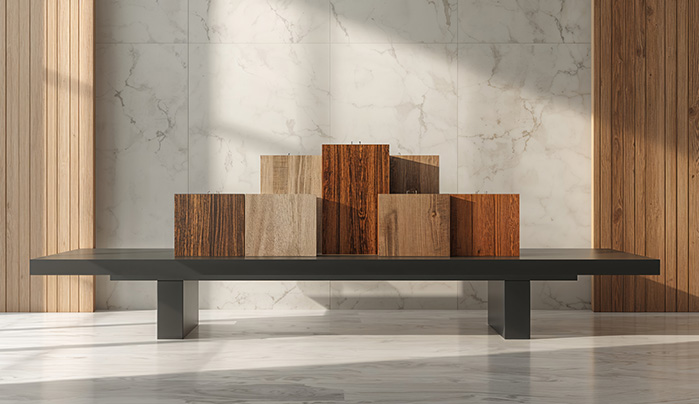
| Type | What it Means | Where it Works Best |
|---|---|---|
| Natural Veneer | Straight from real wood logs | Premium furniture, panels |
| Reconstituted Veneer | Engineered for uniform look | Modern interiors |
| Paper Backed Veneer | Backed with paper for flexibility | Curved surfaces |
| Raw Veneer | Unfinished sheets | Custom work |
| Cutting Method | Look | Feel |
|---|---|---|
| Rotary Cut | Wide, bold grains | Slightly dramatic |
| Plain Sliced | Natural, flowing grain | Most common |
| Quarter Sliced | Straight lines | Clean and formal |
| Rift Cut | Very uniform | Subtle and modern |
| Feature | Wood Veneer | Laminate | Solid Wood |
|---|---|---|---|
| Surface | Real wood | Artificial | Real wood |
| Look | Natural | Uniform | Natural |
| Cost | Mid-range | Budget-friendly | High |
| Maintenance | Moderate | Very low | High |
| Durability | Good | Very good | Depends on care |
The type of wood used changes the whole feel of the space. Some commonly used ones are: Teak, Oak, Walnut, Maple, and Cherry.
Wood veneer is used almost everywhere now. You will mostly see it in:
It works really well with plywood because plywood provides strength. Veneer adds the finish. This combination is quite common in modern homes.
| Product Range | What It Offers | Best Use |
|---|---|---|
| NatzuraWoods | Thick-cut veneers with strong Gurjan base, built for durability | Long-lasting furniture and high-use areas |
| SenzuraStyles | Even grain and tone, clean and consistent finish | Seamless designs across panels and surfaces |
| ProgettoWood | Modern designs with strong build quality | Contemporary interiors and furniture |
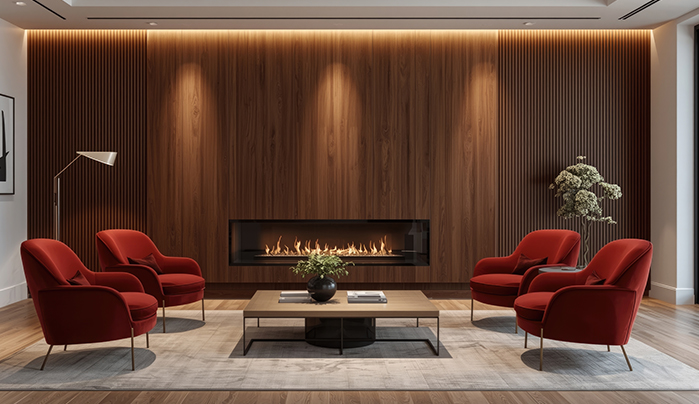
| Dark Forest | Deep shades and bold textures | Accent walls and statement spaces |
Wood veneer works because it solves a real problem. You want your home to look good but you also want it to handle daily life without constant worry. That balance is what makes veneer useful. And when paired with trusted products like CenturyPly plywood, flush doors, and decorative doors, the result feels complete. Everything fits together. CenturyVeneers gives you that flexibility. You get design options. You get durability. And most importantly, you get a finish that still looks good even after years of use. For most modern homes, that combination just makes sense.
Yes. It is a thin layer of real wood. But underneath it is supported by a stronger base.
Yes, in most cases it can be repaired. But remember that minor scratches can be fixed while serious damage is harder to repair.
Yes, veneer can be used in kitchens, but proper sealing is important to protect it from moisture and heat. It works best in areas with controlled exposure to water, such as cabinet shutters. Regular care and maintenance also help maintain its finish and durability over time.
Yes, with proper maintenance, veneer can last for many years while maintaining its finish. Premium options like Century Veneers come with advanced protection features and up to a 10-year warranty, which adds to their durability and reliability.
It depends. Veneer looks more natural. On the other hand laminates are easier to maintain. Both have unique features.
Loading categories...


