
Consumer
Open kitchens look great. Until you have guests over! They can see the mess inside. The smell travels everywhere. And suddenly your “aesthetic open kitchen” is fully on display. Every utensil. Every little mess. Not exactly the vibe, right?
That is where a smart kitchen partition design saves you. It does not block your space. It just gives it a little boundary. Enough to hide the chaos. Enough to keep things looking put together. Let us get into designs that actually work in real homes.
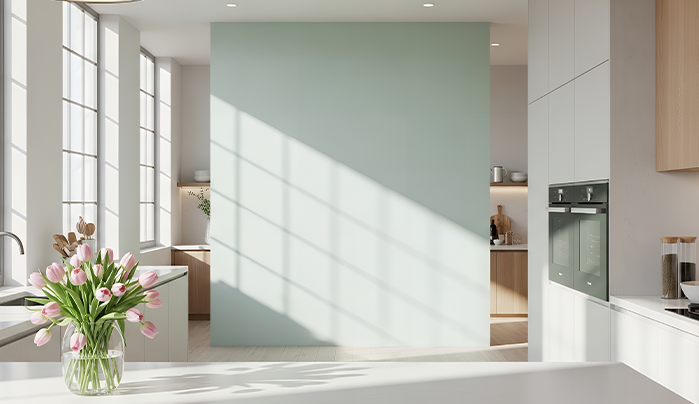
Here are some amazing partition design ideas for the kitchen to make your interior more classy and elegant.
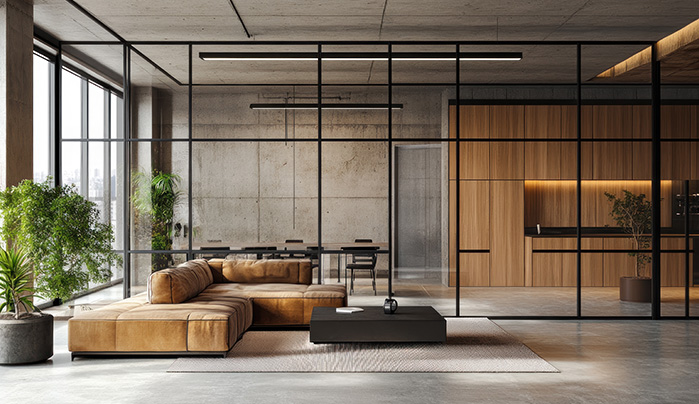
If you don’t want your space to feel closed, glass is the easiest option. It keeps the light flowing and keeps the space looking bigger.
You can go for clear glass or frosted glass, depending on how much privacy you want. Pairing it with a slim plywood frame makes it sturdy without looking bulky.
A glass partition also makes cleaning feel less stressful visually. Even if your kitchen is slightly messy, the transparency kind of softens the look. It does not feel like a heart separation. But more like a subtle division. And if you are someone who likes natural light this works beautifully.
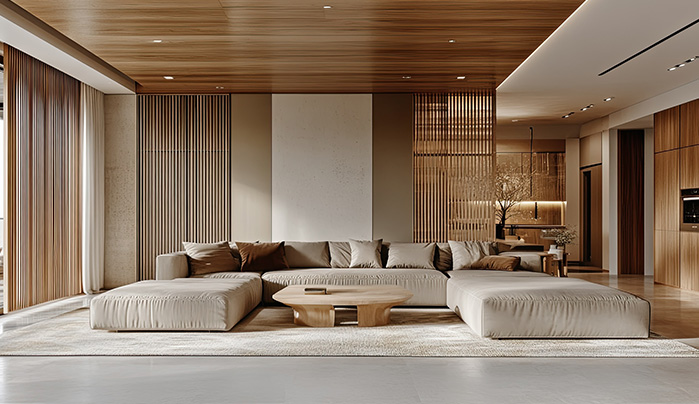
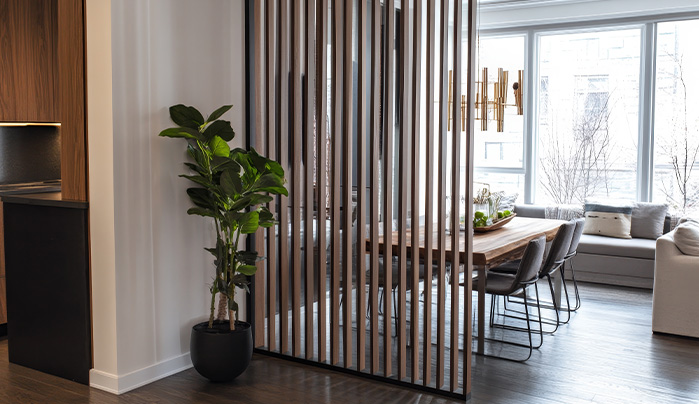
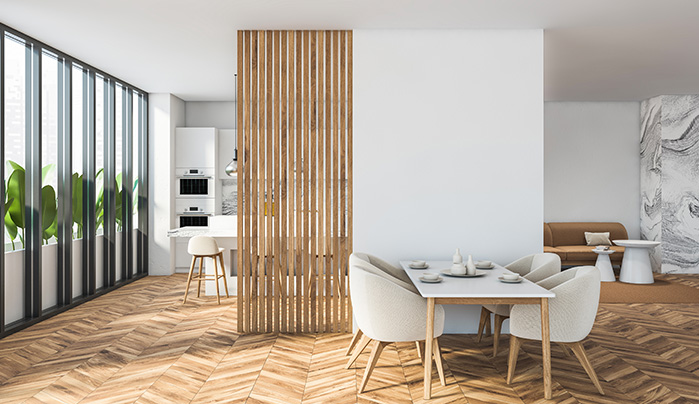
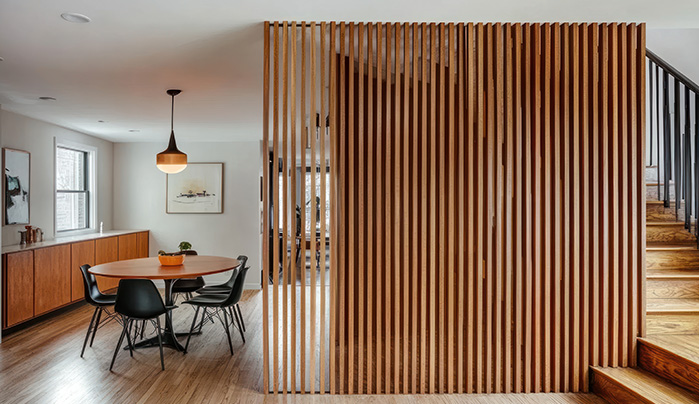
This one is everywhere right now! Vertical wooden slats are so popular because they divide the space but still keep it airy. You can use good-quality plywood with a veneer finish to get that clean wooden look without worrying about long-term wear.
The best part is how effortlessly stylish it looks. You don’t need extra decor. The slats themselves become the design. Also, they play well with almost every interior style. Modern, minimal, and even slightly traditional homes.
It just fits in without trying too hard.
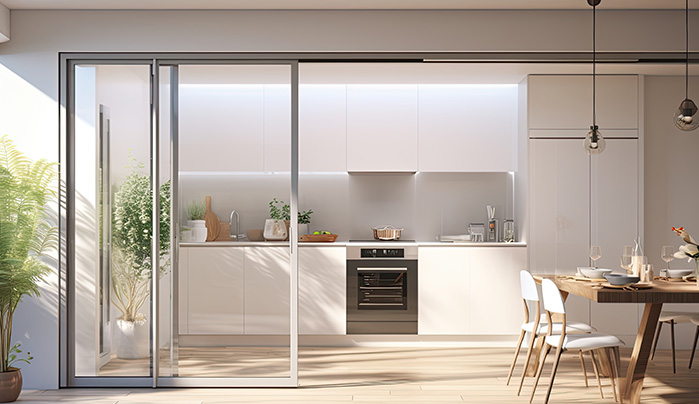
Some days you want your kitchen open for that aesthetic, Pinteresty vibe. But on most days, you want it hidden, because obviously, it gets messy in there. Sliding partitions let you choose. Glass panels or laminate-finished boards both work well here. A glossy laminate can add a slightly modern touch without making things loud.
What makes this practical is control. You are not stuck with one setup. Guests coming over? Slide it shut. Just cooking for yourself? Keep it open. It is also great for smaller homes. Where flexibility matters more than fixed layouts.
Louvers are perfect if you cook a lot. They act as a soft divider. Wooden louvers with a laminate finish are easier to maintain and don’t lose their look over time.
They allow air to pass through easily, which helps with strong cooking smells. Especially in Indian kitchens, where cooking is more intense. Plus, they had a bit of texture. It doesn’t look too flat or boring. Just enough detail to make the space feel designed.
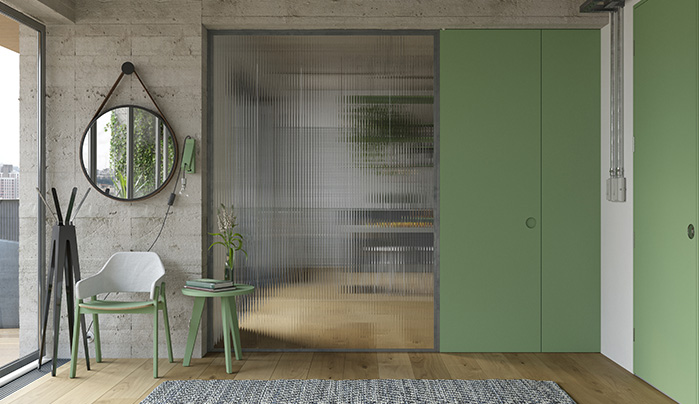
If you can’t decide between the two, just mix both of them! Solid panels below and glass on top. This keeps the mess hidden but still allows light to pass through. You can match the wooden part with your kitchen cabinets using laminates.
This combo works really well visually. The bottom half handles the practical mess. The top half keeps things light and open. It feels balanced. Not too heavy. Not too exposed. Just right for everyday living.
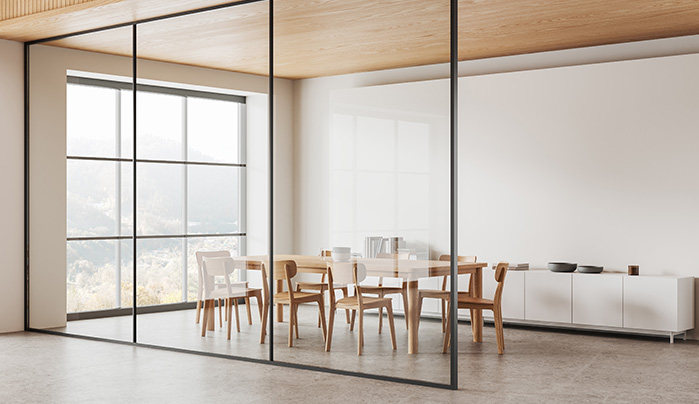
This is where design meets practicality. Instead of a plain divider, add shelves. You can:
Using strong plywood helps because shelves need to handle weight. A simple laminate finish makes cleaning easier. It also makes your space feel lived in. You get to show a bit of personality here. And honestly, having quick access to things like jars or cups makes daily life very easy.
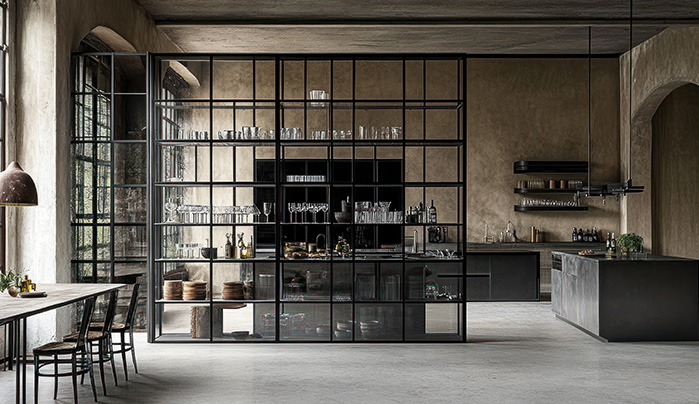
This one is simple but super useful. A counter that separates spaces and adds seating. It becomes your quick coffee spot or even a mini work desk. A durable laminate top works best here since it will see daily use.
It is one of those designs you end up using more than expected. Morning tea, quick meals, even laptop work, and it keeps the kitchen slightly hidden while still feeling connected.
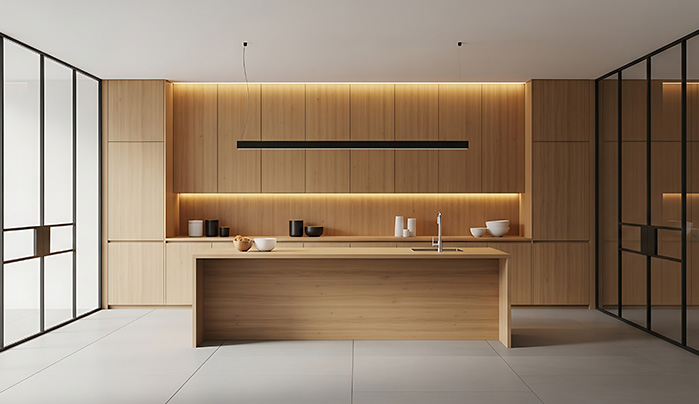
If you like slightly bold interiors, this one will be your best pick. A metal frame plus wooden panels looks structured and feels modern. You can use veneer on the wooden panels to keep the look rich but not too heavy.
The contrast here is what makes it interesting. Metal adds strength, and wood adds warmth. It is a good option if you want something a little different from the usual soft designs.
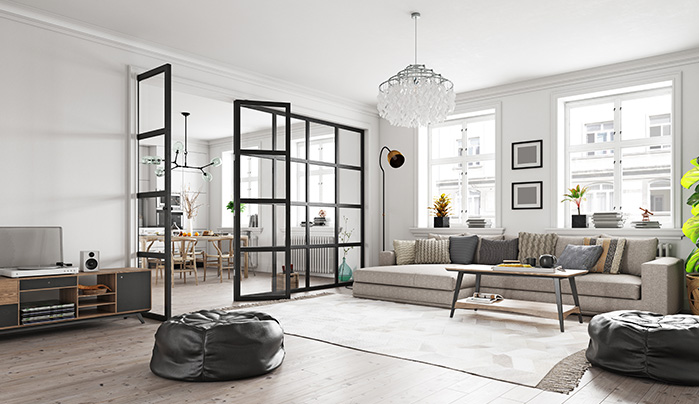
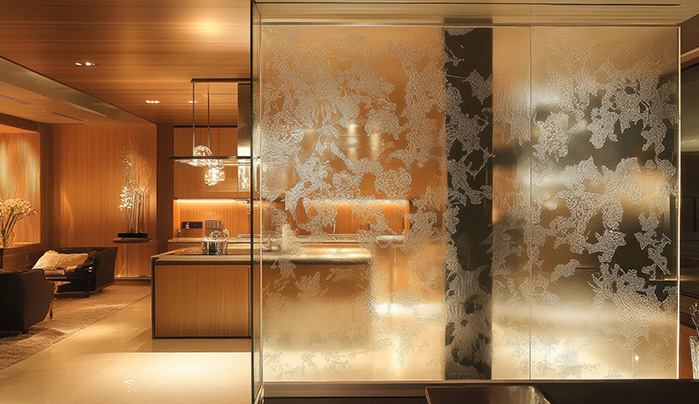
If clear glass feels too exposed, frosted glass is a safe option.
It gives:
It works well in homes where the kitchen is always in use, and you don’t want everything visible all the time. It blurs the mess without blocking light. So your space still feels open, but not revealing. A very practical middle ground.
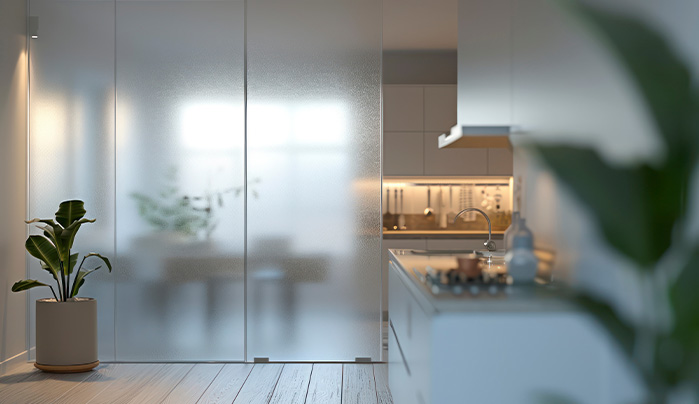
Sometimes simple just works. Flat panels with clean lines look very elegant as kitchen partitions. Use plywood boards with soft matte laminates. Neutral shades keep the space calm and easy on the eyes. This works especially well if your home already has a lot going on! Patterns, colors, and textures. A simple partition balances everything out.
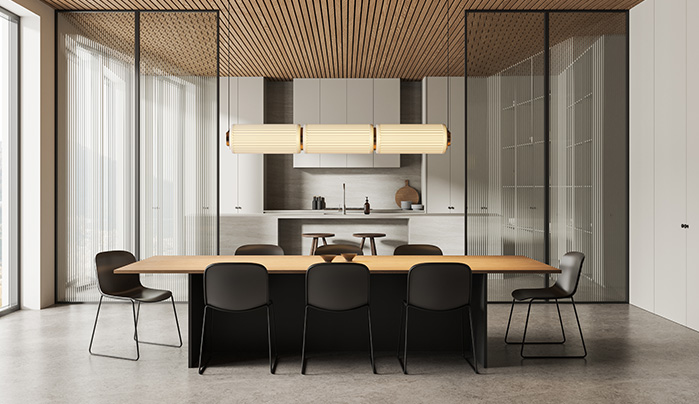
Kitchens deal with steam and spills all the time. That is where WPC boards help. They handle moisture better and last longer. You can finish them with laminates so they still match your interior.
This is more about practicality than looks, but honestly, that matters more in the long run. Why? Because less damage and less maintenance equal less stress!
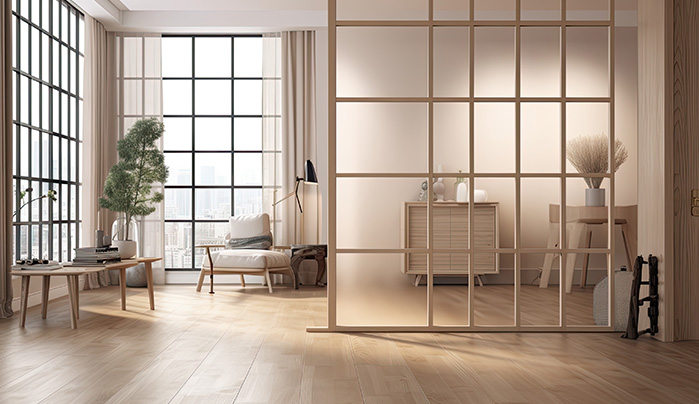
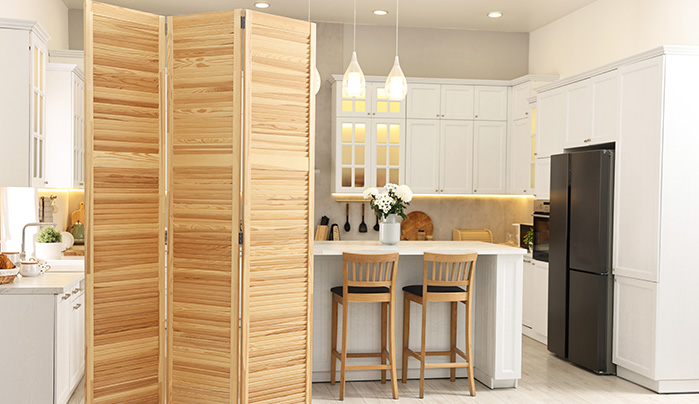
If you don’t want a fixed structure, folding panels are a good option. They open fully and close when needed. Lightweight boards with laminate finishes make them easy to handle and maintain.
It is a perfect choice for compact homes where space needs to be adjusted quickly. You can completely open up the area when needed.
If you like warm interiors, veneers are perfect. They look natural and feel premium. You can pair veneer with a solid plywood base so it stays strong and does not warp over time. It instantly elevates the space. Even a simple design feels expensive and it ages well too, which is a big plus.
This one gives you the best of both. Glass brings light. Louvers add texture. Together, they create a balanced look that feels modern but not too plain. It also works functionally. Light passes through. Air flows easily. So it is not just about looks.
Clean outside. Useful inside! Add cabinets within the partition, and you can store extra utensils and hide clutter. Using plywood with a laminate finish keeps it durable and easy to maintain. This is especially helpful if your kitchen storage is always falling short. You get extra space without adding more furniture.
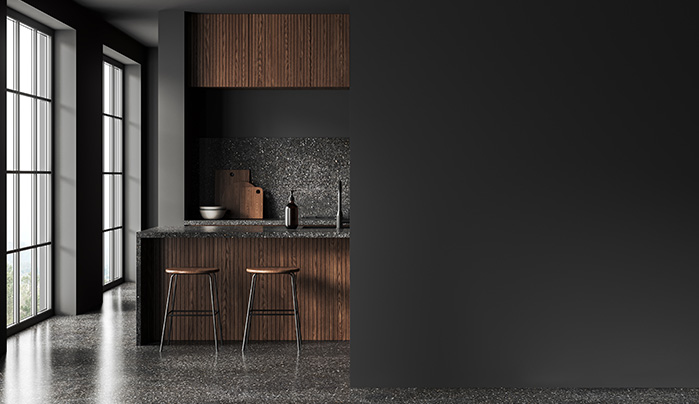
If you want something different, go for cut-out designs. Patterns or geometric shapes add character without taking up extra space. You can keep the finish simple so it doesn’t feel too busy.
In smaller homes, everything needs to do more. Your partition can be a shelf, a desk, or a divider. This kind of setup works well when you want to maximize space without adding extra furniture.
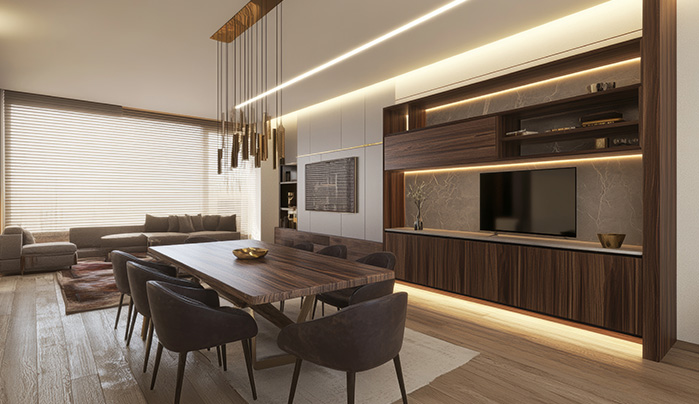
If your space is tight, keep it light. Go for slim panels, open sections, or light colours. Avoid bulky designs. A simple laminate finish in soft shades helps the space feel bigger.
Design looks good on day one. But materials decide how it looks after a year. Here is what works:
Choosing the right combination makes your kitchen partition design last longer without constant fixing.
A good kitchen partition design is not about closing your kitchen off. It is about making it easier to live with. Less mess on display. Less smell spreading everywhere. More structure without losing that open feel. And while design plays a big role, materials quietly do the heavy lifting.
Using quality plywood for strength, laminates for easy maintenance, or veneers for that warm finish can make a real difference in how your space looks over time. Because at the end of the day, it is not just about how your kitchen looks when it is newly done. It is about how well it holds up when life actually happens in it.
Glass or open shelf designs work well. They keep the space open and light.
Plywood with laminates or veneers is a reliable option. WPC boards are useful for moisture-heavy areas.
Yes. Shelves, cabinets, or niches can be added easily.
Not always. Glass and open designs allow light to pass through.
Yes. They give flexibility and work well in modern homes.
Loading categories...


