
Consumer
A small room fills up from the floor first. Shelves change that by moving storage up the wall and freeing the space you actually move through. A badly planned shelf does the opposite. It eats into headroom, clashes with the room, and becomes a dumping spot. This guide covers how to plan a plywood wall shelf that saves space without creating a new problem.
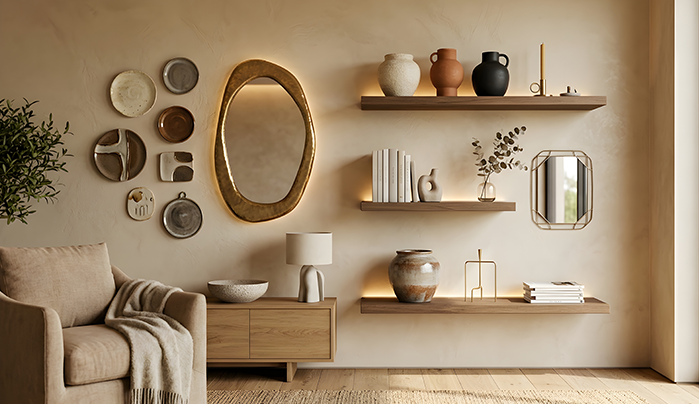
Blank walls are not automatically good candidates. The right wall already plays a role in the room: above a desk, beside a bed, along a narrow section that floor furniture cannot reach.
Check for obstructions before anything else. A shelf that lands too close to a switch, a door frame, or a window opening causes problems every time. Sort the wall position first, then move to design.
Books need depth and strong fixings. Plants need drainage clearance underneath. Decorative pieces sit well on a shallower shelf. Cables and charging units need a clear run for routing.
Being specific about what the shelf carries changes every other decision. A shelf built for books and one built for display are different structures, even if they look the same from across the room.
Four types work well in compact spaces.
Concealed fixings keep the brackets out of sight, leaving only the shelf visible. The clean edge suits rooms where a simple wall arrangement is enough.
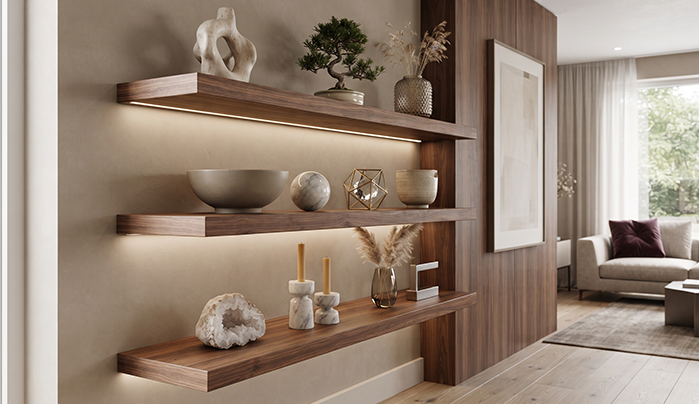
A single shelf runs across one section of the wall, often above a desk or sofa. It keeps storage together instead of spreading it across several smaller shelves.
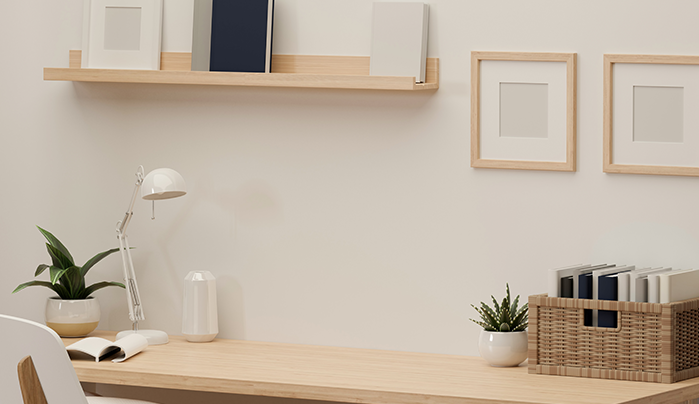
A corner shelf uses a part of the room that often stays empty. An L-shaped or triangular design turns that corner into useful storage without affecting the rest of the layout.
A box shelf surrounds the stored items on three sides, creating a more defined shape. It suits books, storage boxes, and smaller objects that are easier to find when grouped together.
Pick the type that suits the wall first, then adjust the dimensions around it.
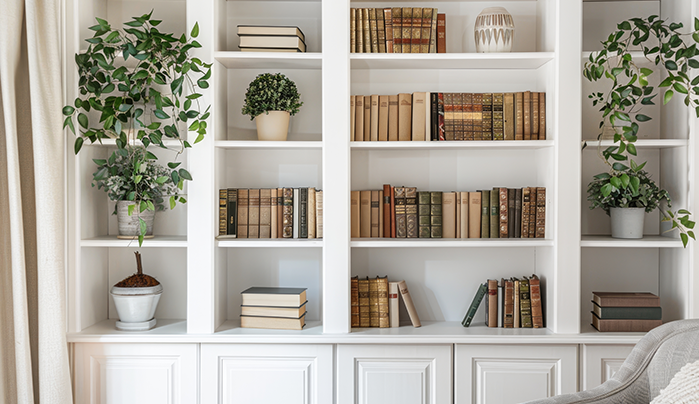
Depth causes the most problems. Go too shallow and the shelf becomes useless. Too deep and it closes in on the room, especially at eye level.
A depth of 200mm to 250mm covers most storage needs in a small room. For books, 300mm works better. For shelves over 800mm long, fix at both ends and in the centre.
Board quality decides if the shelf stays flat after months of regular load. Cheap board bows. Good plywood holds its shape.
CenturyPly offers both grades in standard sheet sizes with consistent surface quality.
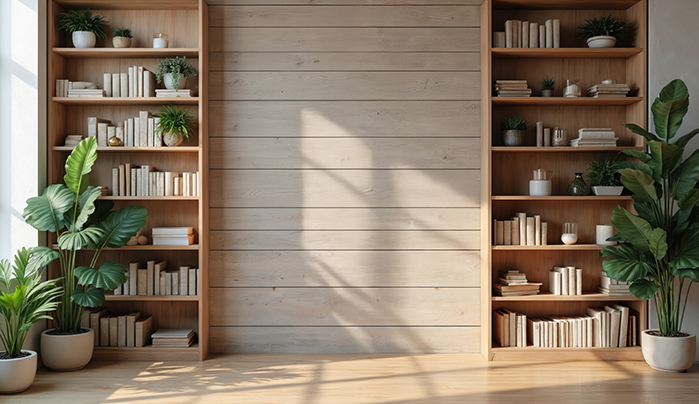
Light finishes open up small rooms. A natural wood look, a pale walnut stain, or a white matte surface keeps the wall feeling open. Heavy stains and dark lacquers make the shelf read as a solid block.
CenturyVeneers offers a natural veneer range for authentic wood grain on the shelf surface. SenzuraStyles provides reconstituted veneer designs with consistent grain texture across larger surfaces.
Most wall shelves fail for the same common reasons:
Leave breathing room around it. A shelf that sits cleanly reads far better than one that fills every centimetre of wall.
CenturyPly provides a wide range of plywood furniture that fits well in compact homes.
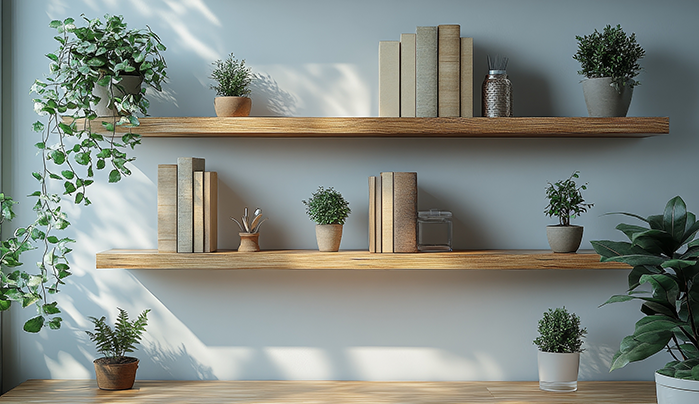
The shelf itself is straightforward. The planning around it is what makes it work. Right wall, right board, right depth, right finish. Get those four things aligned, and the shelf adds to the room without competing with it.
18mm handles most standard shelves up to about a metre long under typical loads. Anything longer or carrying heavy books needs 25mm plywood to stay flat over time without visible sag at the centre.
Above a desk, beside a bed, or along a narrow wall that floor furniture cannot fill. Avoid placing it near switches, doors, or windows, since those positions create an obstruction every time someone reaches for the shelf.
In a dry indoor room, MR-grade plywood handles everyday shelving loads well. A room near a bathroom or kitchen with occasional moisture exposure needs BWP-grade plywood to stay flat and stable long-term.
A floating shelf or a single long shelf keeps the wall looking clean with no visible brackets breaking up the surface. Corner shelves are worth considering in any room where the corners sit completely unused.
Loading categories...


