
Consumer
Most people notice the size of a sofa only after it is in the room.
The delivery is done. The cushions are in place. Then the living room feels different. The gap beside the coffee table is smaller. The chair near the window suddenly looks too close. What looked perfectly reasonable in a showroom now occupies more space than expected.

This article focuses on wooden sofa ideas that suit compact living rooms and the design choices that make them easier to live with.
Wooden sofas have exposed frames. That exposed frame is the design advantage. Upholstered sofas with thick arms and wrapped bases take up visual space even when physically compact. A wooden sofa with slim arms and visible legs reads as lighter in the room.
Raised legs are a specific detail worth looking for. Even 150mm of clearance at the base makes floor space visible, which stretches the visual depth of the room.
Durability matters here too. A small living room gets used heavily. Solid wood frames from quality-graded plywood hold up under daily use without joints loosening or frames flexing over time.
Seat height close to the floor, arms that don't rise above the shoulder of a seated person, and a back that angles slightly. Works particularly well in rooms with low ceilings. The lower shape sits comfortably within the room and often suits spaces where ceiling height already feels limited.
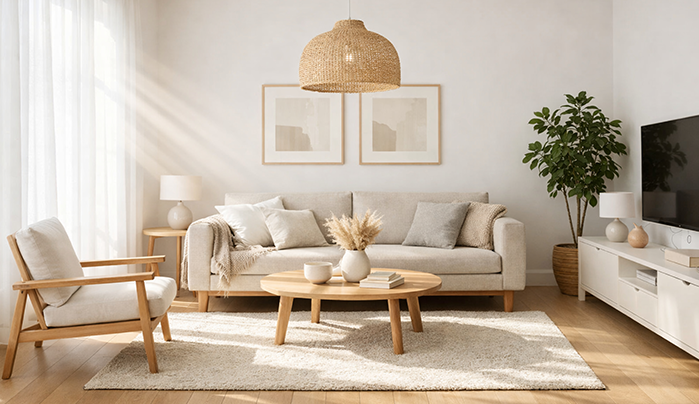
Arms set level with the seat cushion rather than extending upward. Each arm takes up under 120mm in width. A two-seater built this way fits most small living rooms without pushing into circulation space.
One longer section plus a corner section that fills two walls. Gives flexibility no fixed sofa provides and works well for rooms that serve multiple purposes throughout the day.

For a room that does double duty. Folds flat when needed and sits flush when closed. The wooden frame keeps the daytime profile down without making the fold-out mechanism awkward to operate.
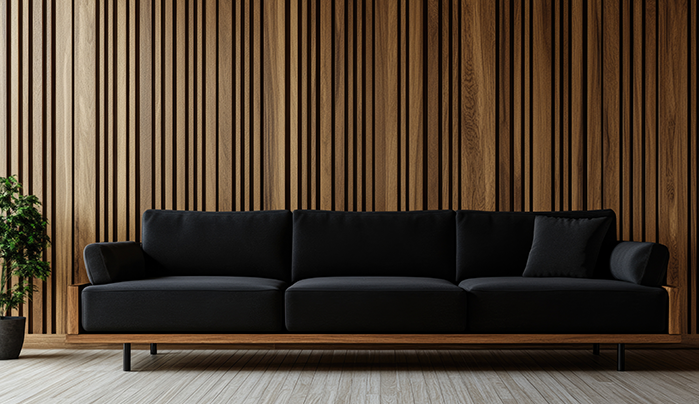
The wood species and finish you choose affect both appearance and durability.
Teak is dense and naturally resistant to moisture and insects. The grain is consistent and takes polish well. Higher cost, but long lifespan.
Sheesham (Indian rosewood) has a pronounced grain and warm reddish-brown tone. Handles heavy use and holds joints reliably. Popular for living room furniture that needs to last.
Engineered wood and quality plywood are used in modern sofa frames where the frame itself is not fully visible. CenturyPly's BWP-grade and marine-grade plywood provide the structural stability needed for sofa frames in humid or heavily used environments, and they machine cleanly for the slim profiles that modern designs require.
Finish options:
The sofa placement and what surrounds it matter as much as the design itself.
A small living room does not leave much room for poor furniture choices. The sofa usually takes up the largest share of the space, so its size, shape, and construction deserve careful attention. Before making a final decision, think about how the sofa will sit alongside the rest of the furniture and how much room it leaves for everyday movement. A sofa that fits the room properly often feels more comfortable to live with than one chosen only for its appearance.
Low-profile sofas, compact two-seaters, and scaled-down L-shaped designs are often easier to accommodate in smaller rooms. They provide seating without taking over the available floor area.
Many wooden sofas are built for regular household use. A sturdy frame and good-quality materials usually make a bigger difference than the design itself.
It can be useful when storage space is limited elsewhere in the home. Keeping a few everyday items inside the sofa can reduce the need for extra furniture around the room.
Loading categories...


