
Consumer
Selecting a board for your brand-new closet seems like a piece of cake until the carpenter asks you a question: “Plywood or particle board?” Suddenly, you feel lost and confused about making such a simple choice. You might look for prices, knock on the boards, and ask yourself which one will last for several years.
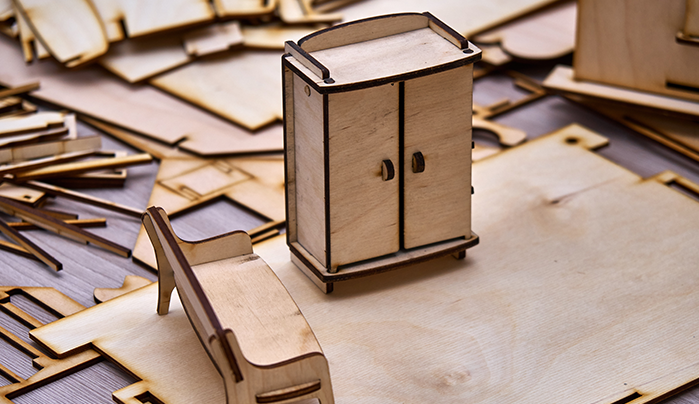
Understanding how the materials work makes your choice much easier than focusing only on how they look. This blog will teach you everything you need to know about particle board vs plywood.
Before discussing particle board vs plywood, let us understand a few fundamental concepts. Both are engineered wood panels; however, because they are manufactured differently, they have different properties.
The particle board vs plywood difference becomes clearer when you compare what actually matters in everyday furniture, not just the price tag.
| Factor | Particle Board | Plywood |
|---|---|---|
| Construction | Compressed wood particles | Bonded veneer layers |
| Strength | Depends on grade and application | Generally better suited to higher loads |
| Moisture | Grade affects moisture performance | Grade determines water resistance |
| Screw holding | Specification-dependent | Generally suitable for demanding fastening |
| Surface | Smooth and uniform | Veneer-based, grade-dependent |
BIS standards test particle board for properties including bending strength, thickness swelling and screw-withdrawal strength, while plywood classifications cover bending and water resistance.
Here’s where the particle board vs plywood question gets practical. Don’t choose based on what sounds “better”; choose based on what your furniture actually needs.
So, which wins? The board that matches the job. Simple, but important.
Now let’s put the theory into actual rooms. Your kitchen, wardrobe and bookshelf face different loads and exposure, so they should not follow one blanket rule.
| Application | What matters most | What to consider |
|---|---|---|
| Kitchen | Moisture, fittings, daily use | Choose a suitable moisture-resistant grade |
| Wardrobe | Loads, hinges, surface finish | Match board grade to construction and hardware |
| Shelves | Load and span | Plywood often suits demanding shelf loads |
| Decorative furniture | Surface and cost | Particle board can suit appropriate applications |
| Partitions | Weight and intended use | Check application-specific requirements |
In other words, application first, material second. That small switch can save you from a very expensive “should have checked” moment.

Before you say “Done!” at the showroom, check these five things. They matter far more than a catchy product label.
| Check | Question to ask |
|---|---|
| Application | What exactly will I build? |
| Load | How much weight must it handle? |
| Moisture | Will it face humidity, spills or water? |
| Grade | Does the grade suit this environment? |
| Standard | Does it meet the relevant Indian Standard? |
BIS currently lists IS 303:2024 for general-purpose plywood and IS 3087:2025 for medium-density particle boards, with defined performance and marking requirements.
Still stuck between options? CenturyPly offers a plywood range suited to different performance and budget requirements so that you can choose based on your project rather than a one-size-fits-all approach.
Warranty is another detail worth checking before you finalise the plywood. With CenturyPly’s Total Cover Warranty , eligible Architect Ply and Club Prime purchases can receive 10 years of additional cover. If a covered defect occurs, certain related furniture costs, including labour and materials, may also be considered under the warranty terms.
CenturyPly offers particle boards as well, explore centuryhdf.com to check out the particle board product.
The particle board vs plywood decision becomes simple when you match the materials to your furniture, space and needs. Once you get acquainted with the qualities of both boards, the decision-making process is hassle-free and guiltless.
CenturyPly simplifies your life even further with 6 online tools, which include Plywood Calculator, 2D & 3D Visualizers, Design Navigator, Colour Finder and 3D Material Plugins. These tools help you plan, estimate and visualise your project before you commit. Find your perfect today with CenturyPly .
Minor surface damage may be repairable, but major swelling, crumbling or edge damage can weaken the panel. The repair method depends upon whether the damage is to the finish or the board itself.
Plywood can be painted, but prep depends on the face and grade. Sanding, the right primer and proper surface preparation will produce a better final finish, especially if the veneer grain is visible or has flaws.
Sure. In one project, furniture manufacturers can use different board types depending on the component's needs. For example, one material may suit structural sections, while another suits low-load panels or internal components.
Loading categories...


