
Consumer
Facades take a lot of beating from the environment. Sun bleaches colour out of paint, monsoons soak into masonry, and dust just keeps piling up no matter how often you clean it off. Repainting every few years to keep a building looking presentable isn't cheap either.
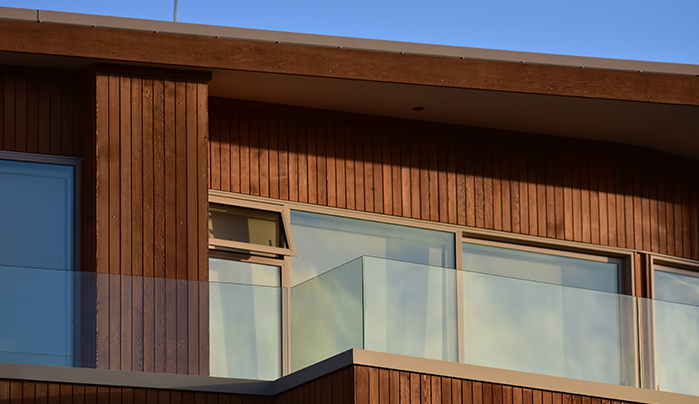
So, what’s the solution? HPL exterior cladding. A durable facade material designed to withstand the elements while keeping your building looking its best. But is it worth choosing for your next project? In this article, we’ll answer that question and explain what it's made of, what it does well, where you'd use it, and how to look after it once it's up.
Strip it down to basics, and it's kraft paper, resin, and a lot of pressure. A series of layers of kraft paper soaked in resin are compressed under high heat and pressure to form a solid board. A decorative coating is applied to it for colour and pattern, and a protective film is applied on top to prevent damage from the sun and moisture.
The result is a lightweight, easy-to-install, durable panel that can withstand the elements for many years and can be designed to resemble wood, stone, metal, or practically any solid colour you'd want on a facade.
Not every exterior material earns its keep once you factor in upkeep and lifespan. Here's where this one actually delivers.
Sun exposure is brutal on most surface materials, as paint becomes chalky, plastic yellows, and wood turns grey. HPL exterior panels are treated to withstand UV degradation, so a facade installed today will still look nearly new several years later.
This one's non-negotiable for many commercial and institutional projects. Good-quality HPL exterior cladding is tested against recognised fire propagation standards, which is exactly what schools, hospitals, and offices need for compliance.
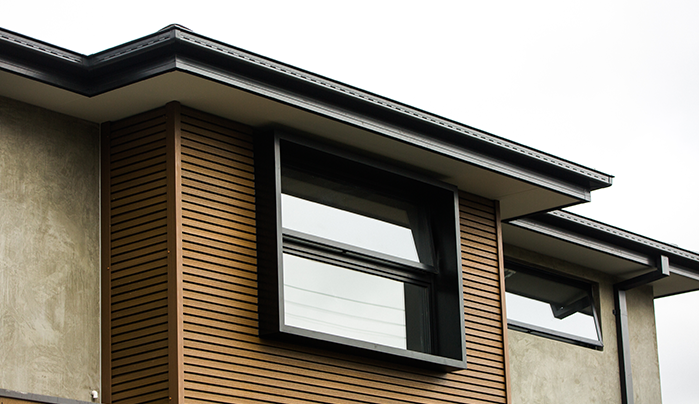
Coastal buildings and locations with a heavy monsoon season require a material that doesn't swell or rot when continually wet. This cladding is designed to prevent water penetration rather than absorb it, which helps maintain the panels' flatness and strength.
Unlike rougher surfaces that tend to hold dirt and pollution, a routine wash is usually enough for this surface. It's also more resistant to dents and scuffs than you would expect for such a lightweight material.
Stone and metal cladding are heavy and slow to put up. HPL panels weigh a fraction of that, which reduces structural load and gets installation crews done faster.
It's not just a residential product, though plenty of homeowners use it that way. The typical use cases are on:
Here's the part people don't expect: the design range is genuinely wide. A few directions to consider:
You can also choose to mix them for a layered facade or go with one shade for a cleaner look.
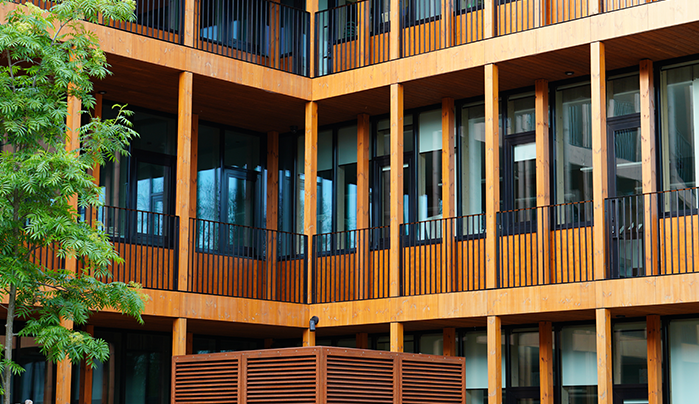
Low-maintenance doesn't mean no maintenance. These panels are capable of functioning as intended for years with just a bit of care.
Follow that, and there's not much else to worry about for years.
If HPL exterior cladding is on your shortlist, CenturyExteria is worth checking out. Manufactured using imported long-fibre kraft paper and a double-hardened resin, compared to the single-hardened resin used by most competitors, the panels offer increased dimensional stability and pull-out strength.
The decorative layer uses European and Japanese papers, so the colour holds up even under prolonged sun. Not to mention they're also fire-retardant, self-supporting, and compatible with ventilated facade systems, which is why they can be seen in homes, hospitals, and high-rise commercial buildings.
From durability to fire safety features to the variety of finishes offered, HPL exterior cladding virtually solves every problem that a modern facade may face, minus the maintenance hassle that comes with many other options.
From a house to an office block to a large-scale institutional project, it is built to withstand the everyday grind without losing its lustre. If a facade is next on your buying list, CenturyExteria's line of exterior-grade laminates is a good place to start.
Around 15-20 years with proper installation and basic upkeep, sometimes longer.
Yes. Its moisture resistance and UV make HPL exterior cladding a solid choice for coastal and humid regions.
No. The colour is built into the decorative layer itself, so there's no repainting cycle as you'd get with plastered walls.
Good HPL exterior cladding, including CenturyExteria, is tested and certified to fire propagation standards, which is why it's used in commercial and institutional buildings.
Loading categories...


