
Consumer
Wardrobe doors take contact every single day. A laminate that marks quickly, reads the wrong tone under the room’s actual lighting, or starts looking dated within a few years is a problem you notice every morning.
These ideas work through the main finish directions for a sliding wardrobe laminate design, covering what makes each finish suitable, where it works best, and which substrate to specify underneath it.
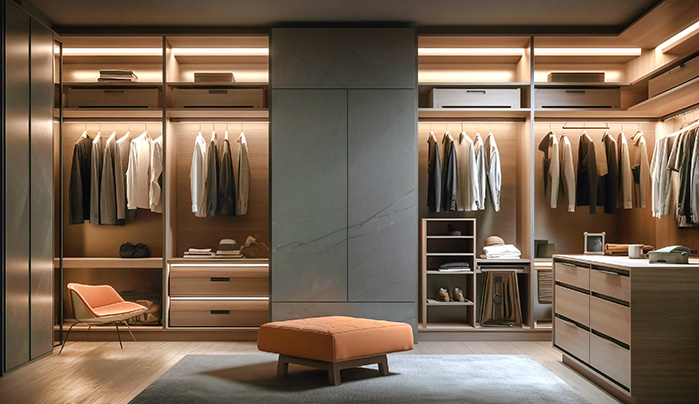
Oak in a matt finish suits almost every bedroom palette. White walls carry it well. Warm greys carry it just as well. Even earthy, darker tones do not fight it. Fingerprints stay invisible on the matt surface, and on a wardrobe door used constantly, that is a real advantage.
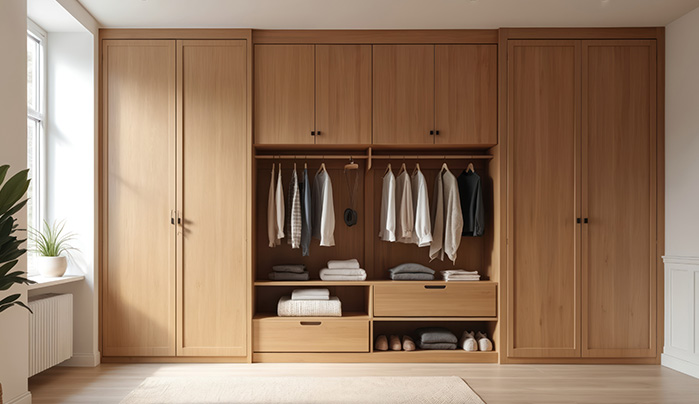
Rotating the grain to run horizontally changes what the wardrobe does in the room. The eye follows the width of the panel. The room feels wider. Dark walnut in this orientation reads as furniture placed in the room, not fitted storage, which is the better result for a master bedroom with considered interiors.
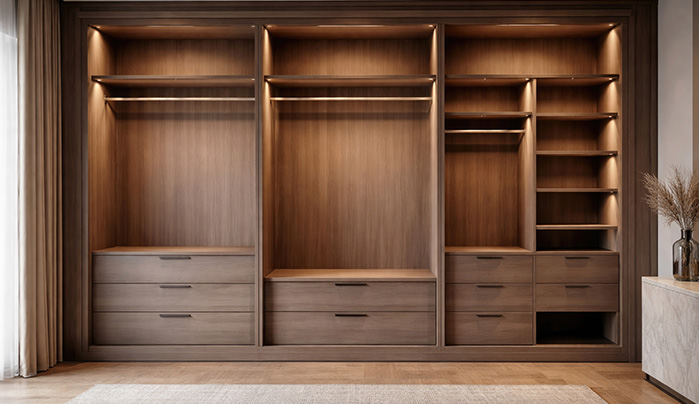
White gloss pushes light back across the room. In bedrooms with one window or limited daylight reaching the wardrobe wall, this makes a real difference. Fingerprints show clearly, but they wipe off with one pass of a cloth. This particular sliding wardrobe laminate design suits guest bedrooms and rooms where the reflective quality is the point.
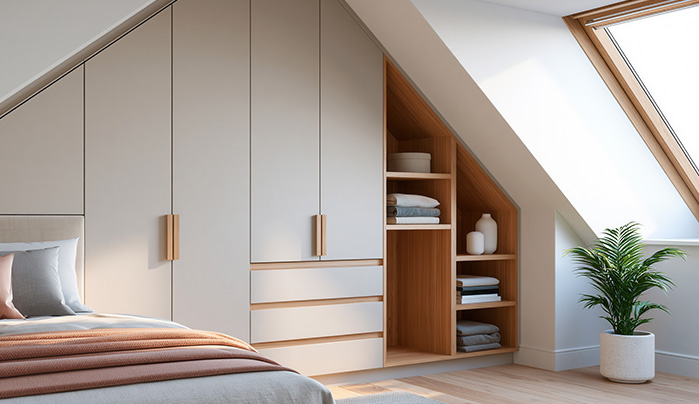
Charcoal in a low-sheen finish adds weight to the room without the starkness of full black. Warm timber floors, brushed steel pulls, and cool bedding palettes all sit comfortably with it. For a master bedroom wardrobe that needs to carry some visual presence without dominating the space, this works consistently.
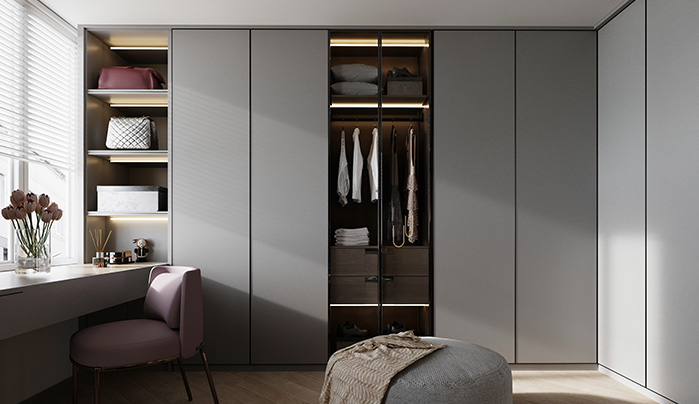
Place a woodgrain panel next to a coordinating solid colour panel and the wardrobe face becomes a composition. The split can fall between separate sliding panels or within a single wide panel. Warm oak with dusty green, or light ash with deep navy, both produce pairings that look deliberate and composed.
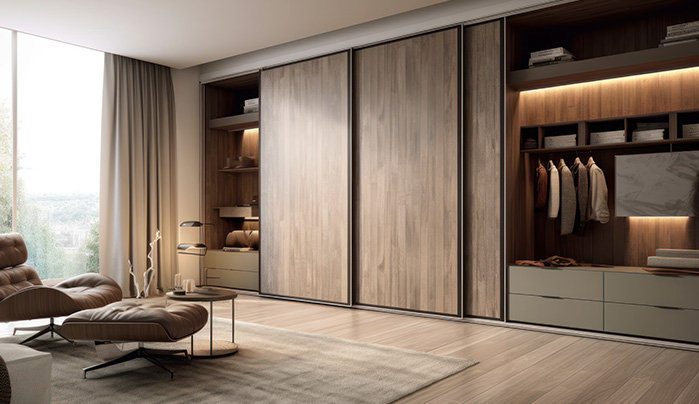
Linen-effect surfaces carry a fine cross-textured finish. They add visual dimension through texture alone, with no strong colour and no pattern to manage. CenturyLaminates produces textured surfaces that sit naturally alongside rattan furniture, natural fibre rugs, and neutral walls. Japandi and Scandinavian-influenced rooms absorb this finish without any further adjustment.
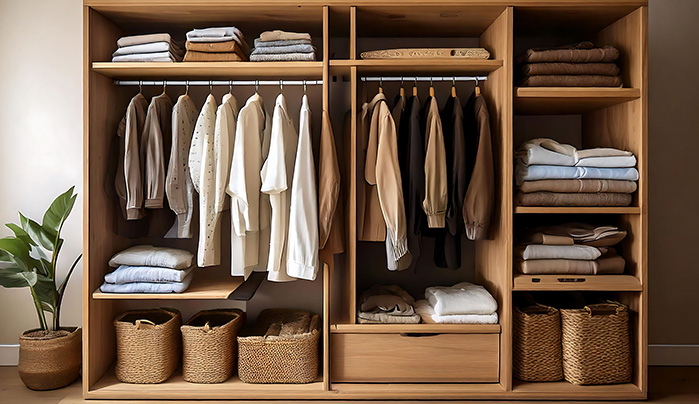
Teak runs warmer and more amber in tone than oak or walnut. Run it vertically on the sliding panels and the eye goes upward, not sideways. That upward movement is genuinely useful in rooms where the ceiling is lower than ideal. This sliding wardrobe laminate design crosses traditional, transitional, and contemporary bedrooms without looking out of place in any of them.
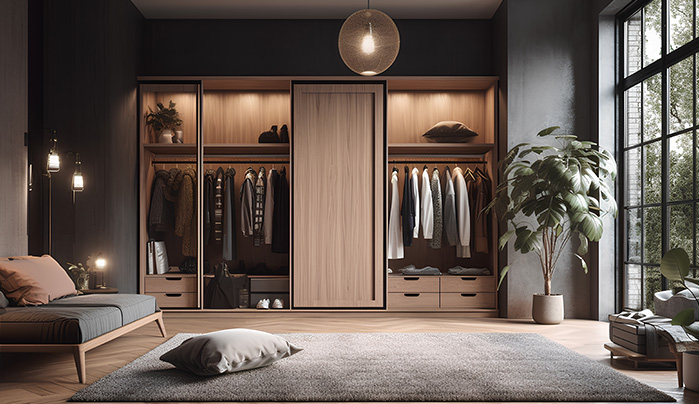
Sage green became a popular bedroom colour direction for a reason. In a matt finish on wardrobe panels, it reads calm and settled, never bold or demanding. It pairs well with brass hardware, warm timber flooring, and white walls, without requiring any additional accent elements to make the room feel complete.
Beige on wardrobe panels suits smaller bedrooms because it does not add visual weight. Under warm lighting, a well-selected beige tone reads close to the wall colour, and the wardrobe starts to recede into the room quietly. It does not date quickly, which is worth considering when a finish needs to last a decade or more.
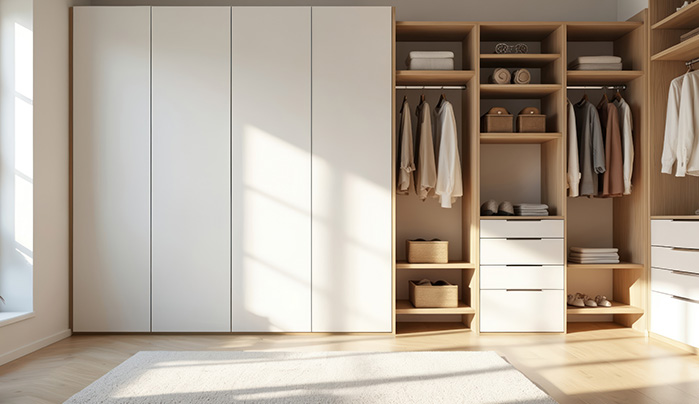
Ash grey woodgrain bridges warm timber tones and cool grey solids in a single finish. The grain structure brings warmth. The grey tone brings a cooler counterpoint. For bedrooms where the palette mixes both directions, this sliding wardrobe laminate design anchors both ends without sitting awkwardly in the middle.
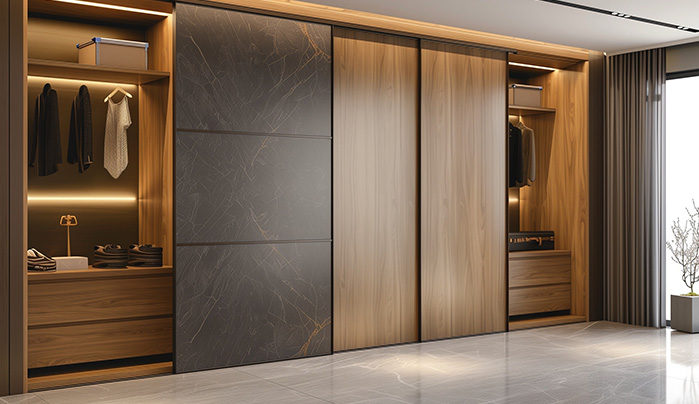
Combining a white gloss laminate panel with an integrated mirror section produces two effects at once. The gloss pushes ambient light outward. The mirror extends perceived depth into the wall. In smaller bedrooms where a separate freestanding mirror is impractical, this pairing solves two problems with a single wardrobe door.
Espresso brown sits close to black but reads warmer. The matt surface prevents the depth of colour from feeling heavy in the room. Pair it with brass or warm gold hardware and the combination reaches a premium direction. This sliding wardrobe laminate design needs adequate daylight on the wardrobe wall to work at its best.
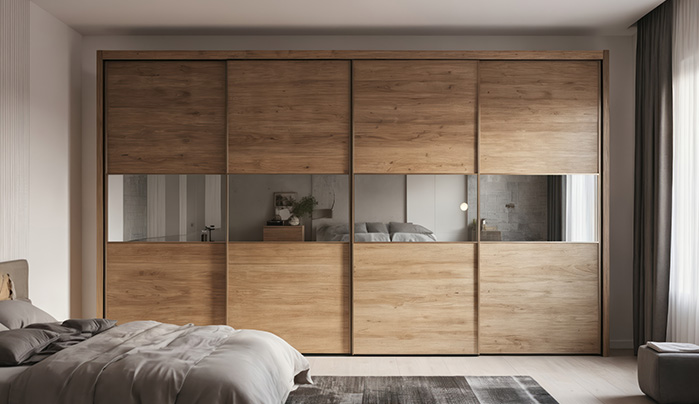
Textured finishes that replicate rough-sawn or reclaimed timber behave differently across the day. The surface depth shifts with the direction and intensity of light. Flat-printed finishes cannot replicate this. Industrial and rustic bedroom directions suit it well.
For the substrate beneath these panels, WPC boards from CenturyPly provide the dimensional stability that keeps the panel flat and the sliding track aligned over time. Rooms with any humidity variation benefit from WPC over standard plywood here.
Navy panels create a focal point on the wardrobe wall without needing further decorative treatment in the room. Brushed black or chrome hardware keeps the finish cohesive. Lighter walls and flooring are needed to balance the depth of the tone, especially in rooms that do not receive strong directional daylight throughout the day.
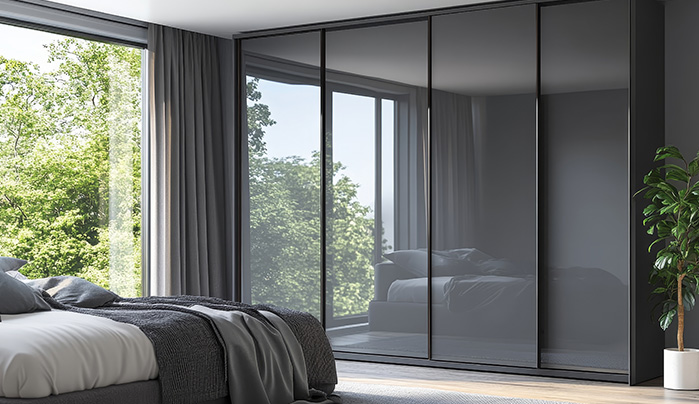
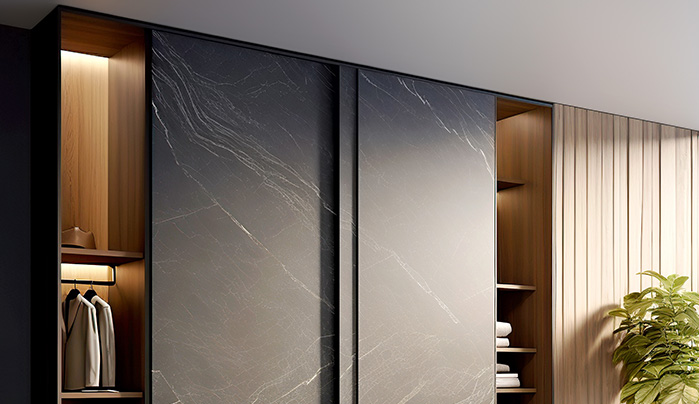
Stone-effect laminates reproduce marble or concrete textures in a flat printed surface, finished in matt or soft-sheen. On wardrobe panels set against timber flooring and soft furnishings, the stone finish provides material contrast that reads contemporary without requiring elaborate hardware or design detailing. CenturyLaminates offers stone-effect options across light and dark tones that suit this application directly.
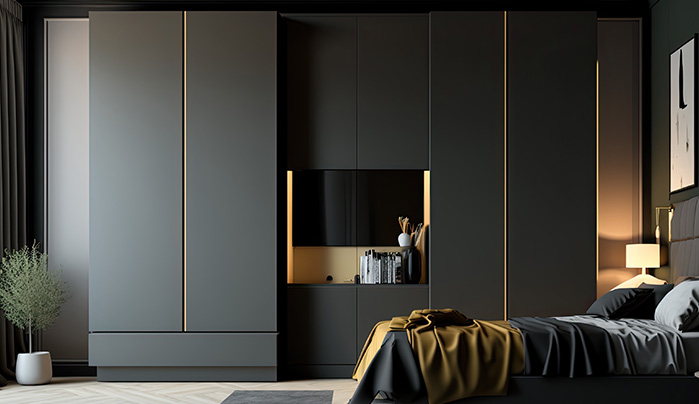
Mint and pistachio tones suit children's bedrooms and younger adults' rooms where the palette aims to stay light. In a matt finish, these colours do not demand attention. They sit quietly on the wall and coordinate naturally with white furniture and natural wood accents. For rooms that need to feel fresh without being loud, this sliding wardrobe laminate design fits the brief.
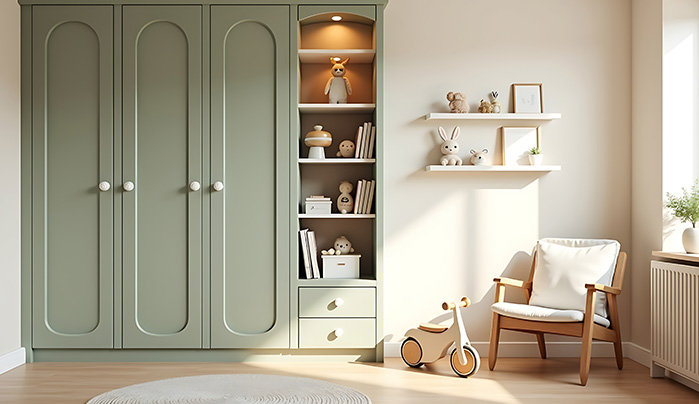
Terracotta suits rooms with warm-toned lighting, natural fibre textiles, and aged brass fittings. Off-white walls and wooden flooring carry it well. The matt finish holds the colour grounded. In a gloss finish, terracotta risks reading as oversaturated, so the finish type carries as much weight as the colour selection itself.
Cherry wood laminate carries a warm red-brown grain. In a gloss finish, the richness of that grain becomes more visible and the panel reads as a premium surface even without elaborate hardware. Formal master bedrooms and traditional interior directions suit it. The finish does not need additional detailing to justify its place in the room.
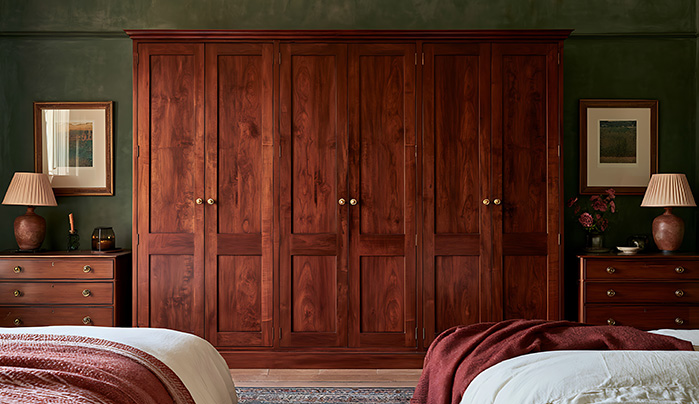
Horizontal router grooves applied across a flat laminate panel create an architectural panelling effect on the wardrobe face. The laminate beneath the groove can be any solid colour or understated woodgrain. The groove line does the visual work. CenturyPly's Design Navigator at designnavigator.centuryply.com lets designers and homeowners preview this kind of groove detail across different finish combinations before finalising the selection.
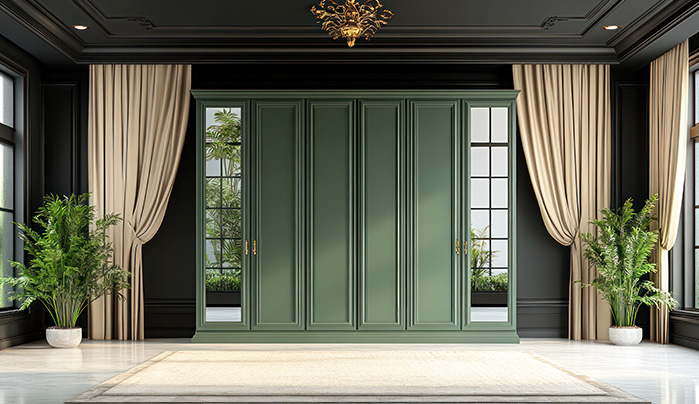
Black woodgrain is the highest-contrast finish on this list. The grain gives the surface a dimensional quality that flat solid black cannot achieve. In bedrooms with good natural light and lighter flooring, this sliding wardrobe laminate design reads as a bold architectural statement. Smaller rooms or those with darker surrounding surfaces need lighter balancing elements to make it work.
Before the laminate choice is confirmed, a few checks at this stage prevent problems that only become visible once the panels are installed.
CenturyPly's plywood and WPC boards cover the structural requirements of wardrobe construction from the carcass to the sliding door panel substrate. CenturyLaminates covers the surface layer, with woodgrains, solid colours, stone effects, and textured finishes across the full range of sliding wardrobe laminate design directions listed above.
Matt and textured finishes are the practical choice for wardrobes in daily use. Fingerprints and marks show far less on these surfaces than on gloss. Gloss works well in guest bedrooms or rooms where the reflective quality is a deliberate design goal, but for a main bedroom opened and closed constantly, matt holds up better on a day-to-day basis.
Most wardrobe panels use laminate between 0.8mm and 1mm. Thicker options at 1.25mm exist for higher-wear surfaces. The flatness and structural performance of the panel depend on the substrate board, not on the laminate thickness alone. Specifying the right board grade is as important as the laminate specification itself.
It can, and doing so creates the cleanest finish throughout. The substrate can differ between the panel and the carcass without any visible effect on the surface, since CenturyLaminates bonds to both plywood and WPC boards with the appropriate adhesive process.
In rooms near bathrooms, in coastal locations, or wherever seasonal humidity changes significantly, WPC boards resist the dimensional movement that causes plywood to swell. That swelling distorts the panel and misaligns the sliding wardrobe laminate design track over time. For standard dry indoor rooms, MR-grade plywood remains adequate.
Start with the surfaces already in the room: floor colour, wall tone, existing furniture, and bedding. The wardrobe laminate either extends one of those tones or provides a deliberate contrast against them. CenturyPly's Design Navigator lets you visualise different finish choices on a wardrobe surface in context before making a final decision.
Loading categories...


