
Consumer
If you've scrolled through home interior pages lately, you've probably noticed panelled walls showing up everywhere, from cosy bedroom accent walls to entire office reception areas. It's not just a trend though; panelling genuinely solves problems that paint and wallpaper can't, like hiding wiring, adding insulation, or just giving a flat wall some actual character.
Here's a proper breakdown of the wall panelling types out there, what they're good for, and roughly what they'll cost you.
Wall panelling is a pre-finished material that is added to a wall rather than painted or wallpapered directly onto the plaster. It can be solid wood, engineered wood, laminate, or PVC, and can be installed high, as a half wall wainscot, or as an individual statement panel behind a couch or bed.
Beyond appearance, panelling can also conceal a patchy wall or cable run and, in some cases, provide additional insulation and avoid the repainting a regular wall will eventually need.
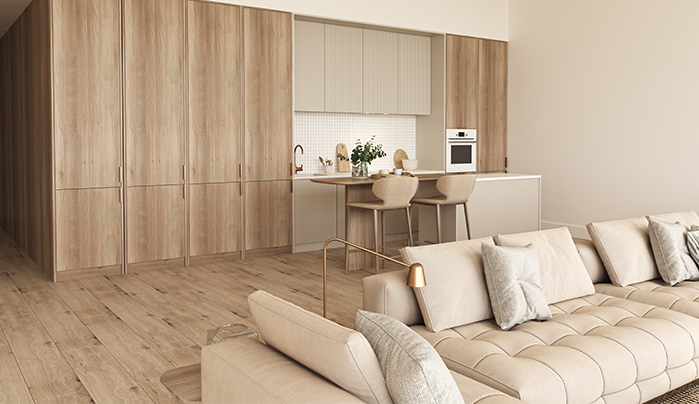
Not all wall panelling types are built for the same job, and the price gap between them is bigger than most people expect.
| Type | Look and Feel | Typical Best Use | Relative Price |
|---|---|---|---|
| Solid Wood | Rich, natural grain; ages well | Living rooms, studies, statement walls | High |
| Veneer Panelling | Real wood look at a fraction of solid wood's cost | Bedrooms, offices, feature walls | Medium to High |
| Laminate Panelling | Wide range of finishes, including wood-look | Living rooms, commercial interiors | Medium |
| MDF Panelling | Smooth, paintable, great for fluted or grooved designs | Bedrooms, dry living spaces | Low to Medium |
| PVC Panelling | Sleek, uniform finish; wipeable | Kitchens, bathrooms, utility areas | Low |
| Fabric or Upholstered | Soft texture, adds acoustic dampening | Bedrooms, home theatres, headboards | Medium to High |
Each of these wall panelling types brings something different to the table.
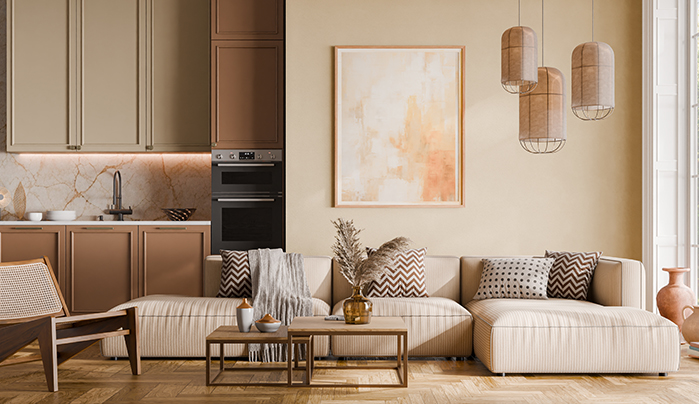
After choosing a material, the design brings the personality along. Here are some suggestions that we've seen recurring in recent projects:
The cost of wall panelling varies greatly depending on the type of panelling, so it's important to understand what's really driving the number before requesting a quote.
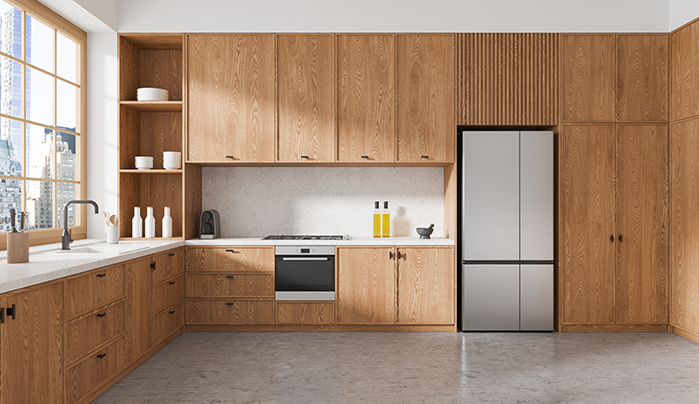
Picking between all these options gets easier once you stop starting with the design and start with what the room actually needs.
A kitchen or bathroom needs a material that handles moisture, which narrows things down to PVC or a properly BWR-treated laminate fairly quickly. A living room or bedroom has more flexibility, so it comes down to budget and the look you're after.
Solid wood is stunning but requires occasional sealing and maintenance, while laminate and PVC require only a quick wipe-down. For applications where acoustics matter, such as in a home theatre, fabric or upholstered panels are a worthwhile investment because of the dampening they offer.
Some systems need a completely flat wall to look right, while others are more forgiving of minor surface irregularities, and a quick chat with whoever's installing it usually clears this up faster than guessing.
Wall panelling has grown well past its old reputation as a formal, dated choice. With the range of wall panelling types now available, from solid wood to PVC to fluted MDF, there's genuinely something for every room and budget.
CenturyLaminates offers a solid range for anyone looking at laminate-based panelling specifically, with finishes built to hold up to daily use. Whatever direction you go, matching the material to the room first will save a redo a couple of years down the line.
PVC panelling wins here, without much competition. Wood swells, MDF falls apart the moment moisture gets in, and fabric obviously isn't going anywhere near a shower wall. PVC handles daily steam and splashes without absorbing water or warping at the seams.
Paint wins easily on day one, per square foot. Panelling requires redoing far less frequently than paint, so the cost difference diminishes and sometimes even works in favour of the panelling.
Most installations work fine over a flat, stable existing surface. Installers sometimes strip old tiling first anyway, mostly because it provides a cleaner base and avoids adhesion problems down the line.
Loading categories...


