
Consumer
Most people spend more time choosing kitchen cabinet colours than they spend choosing what those cabinets are actually made of. The surface finish and the board beneath it are what determine how a kitchen looks and performs after two, five, and ten years of daily cooking. This article covers the surface options suited to Indian kitchens and the decisions that go along with choosing them.
Burners running at full heat for long stretches discolour poorly rated cabinet surfaces near the hob within months. Turmeric marks permanently on porous finishes if not cleaned immediately. Steam from pressure cookers builds humidity levels that standard interior laminates are not designed to handle over the years.
Beyond performance, Indian home design has shifted. Modular kitchens with clean lines, neutral colours, and handleless shutters are now common across urban homes, and the surface finish sits at the centre of how a kitchen looks and feels.
These work best in kitchens with good natural light and reasonable space. The reflective surface makes a room feel brighter and cleans quickly after cooking. CenturyLaminates offers high-gloss finishes across a wide colour range, from crisp whites to deep charcoals, suited to contemporary modular layouts.
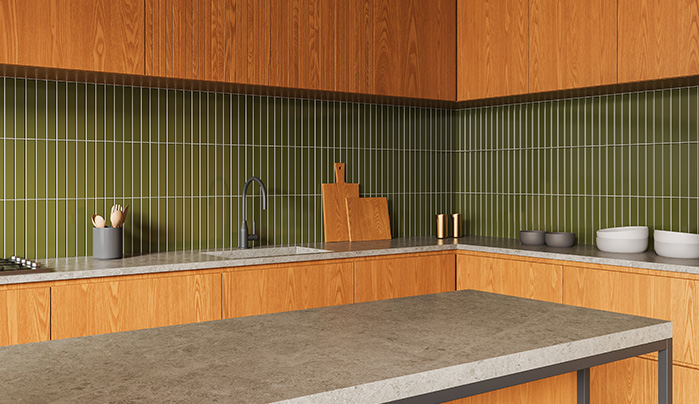
Matt has become the most popular finish in Indian kitchens over recent years, mainly because it hides daily wear far better than gloss. Fingerprints, light grease, and condensation marks are much less visible. CenturyLaminates produces matt finishes in solid colours and surface textures across different price points.
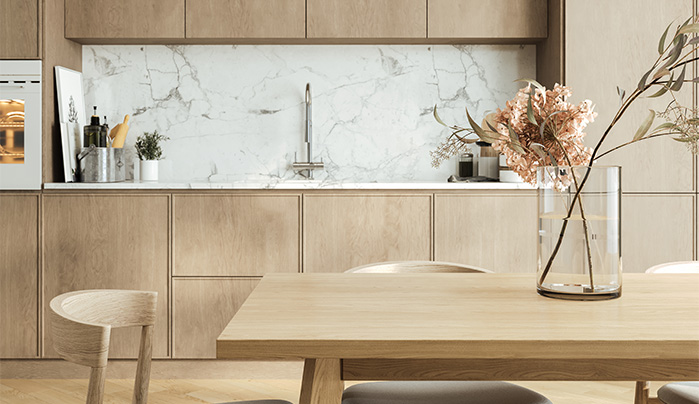
Textured laminates bring wood-grain or stone appearances into a kitchen in a format that handles daily cooking far better than actual timber or stone would. A wood-effect panel on select doors or an island front breaks the flatness of an all-painted kitchen without extra maintenance. CenturyLaminates carries both wood-effect and stone-effect options.
Kitchens built around a genuine wood aesthetic need veneer surfaces, not laminate alternatives. The difference in appearance is clear, with real grain depth that printed finishes cannot carry. CenturyVeneers offers selections suited to kitchen use, typically applied to island fronts or feature cabinet doors where the visual quality is most visible.
A quality laminate on a poor-grade board will still fail in an Indian kitchen. The substrate absorbs steam and humidity over time, and once the board swells or warps, the surface finish degrades with it.
CenturyPly WPC boards are fully waterproof and hold their shape in humid kitchen conditions. For cabinet carcasses and shutters near the sink or hob, CenturyPly BWP-grade plywood handles ongoing moisture without structural failure. Both are built for the specific demands Indian kitchens place on any board used in them.
A few practical points help narrow the decision:
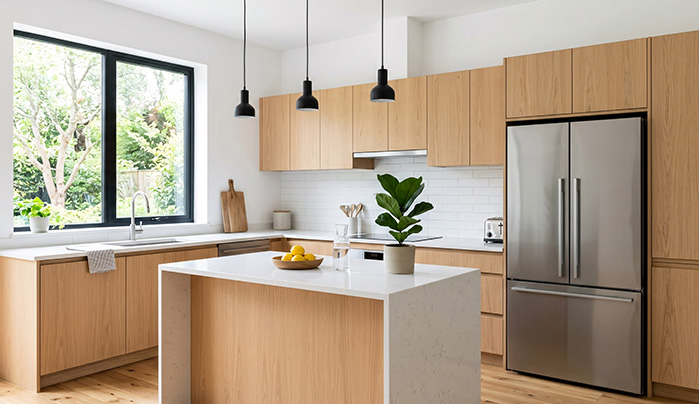
CenturyPly's range covers the main surface and substrate requirements for Indian kitchen applications.
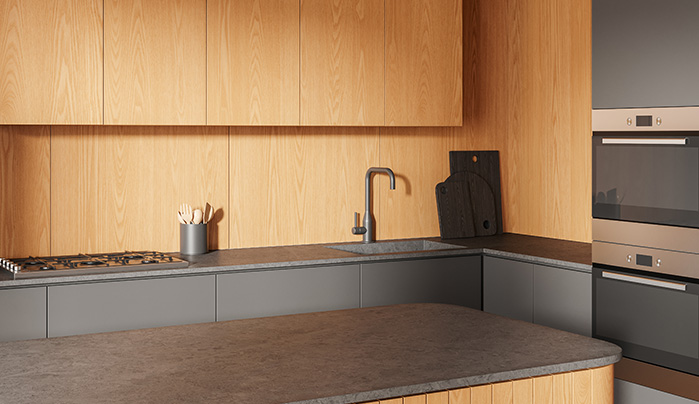
A well-planned kitchen starts with the right surface choices. The finish shapes how the kitchen looks, while the board underneath supports how it performs over years of daily use. Choosing both together creates a kitchen that stays practical and visually consistent. CenturyPly offers laminates, panels, and plywood that work together, making it easier to build a kitchen with matching materials from a single range.
Matt finishes perform better in most active Indian kitchens because they show oil marks and fingerprints less than high-gloss alternatives. High-gloss suits well-lit kitchens where regular wiping is manageable, and the brighter visual effect works with the space.
Yes, CenturyPly WPC boards are fully waterproof and suited to kitchen cabinet carcasses and shutters, particularly in zones near the sink where steam and moisture are regular. The boards hold their shape in humid conditions, which is a common failure point for standard interior-grade plywood in Indian kitchens.
Gloss laminates are brighter and quick to wipe clean, but show every fingerprint and smudge clearly. Matt laminates hide daily surface contact better and suit busier kitchens, though textured matt finishes need more thorough cleaning because grease settles into the surface pattern over time.
Loading categories...


