
Consumer
Time for any furniture or renovation project and one of the first calls you make is the board. MDF, HDHMR or plywood? It sounds like a small decision. It is not. The board you choose decides how the finished piece looks, how long it survives, what it costs you and how it copes with the room it lives in.
The catch is that these three names get thrown around loosely and the real differences don't show up at a glance. So this guide sorts them out. We'll go through what each board is, how they compare on the things that actually matter and which one suits which job. By the end, you'll know the board that fits your project, your budget and whatever the space throws at it.
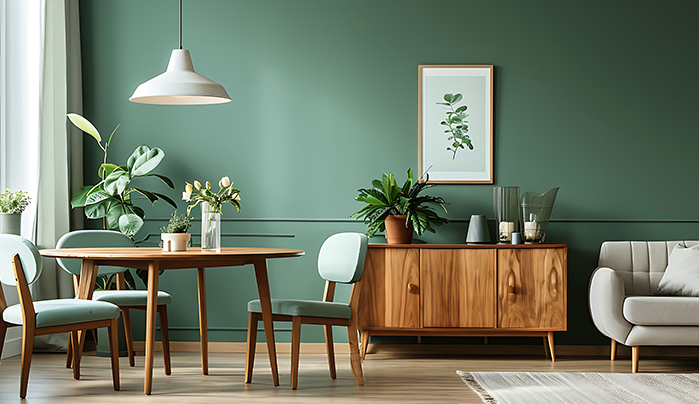
A quick primer before we compare them.
MDF (Medium Density Fibreboard): wood residuals are broken down into fibres, mixed with wax and resin and pressed into panels under heat. What you get is a uniform board with a smooth surface.
HDHMR (High Density High Moisture Resistant board): same fibre-based process, but pressed to a higher density. That extra density is what gives it more strength and better resistance to moisture.
Plywood: built a different way. Thin layers of wood veneer are glued and pressed together with the grain running in alternating directions and that cross-layered build is where its strength and dimensional stability come from.
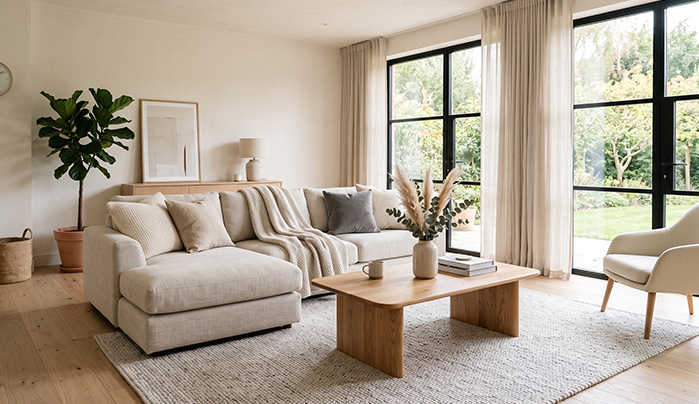
Here's how the three line up on the points that usually settle a purchase.
| Feature | MDF | HDHMR | Plywood |
|---|---|---|---|
| Core Material | Wood fibres, resin bonded | Wood fibres, higher density | Cross-laminated veneers |
| Water Resistance | Water resistant | High moisture resistant | Boiling Water Proof |
| Termite Protection | Termite and borer proof | Borer, termite and fungus proof | Borer and termite proof |
| Surface | Uniform, smooth | Very smooth, paintable | Can be laminated or veneered |
| Structural Strength | Denser than particle board | Higher density than MDF | High load-bearing capacity |
| Weight | Lighter | Moderate | Heavier |
| Price Range | More budget-friendly | Slightly premium | Premium, long-term value |
| Best Suited For | Furniture, panelling | Wardrobes, cabinets, shutters | Furniture, cabinetry, structural use |
Easiest way in is to start with the room and the piece you're building.
Your own priorities push you toward one board as much as the room does.
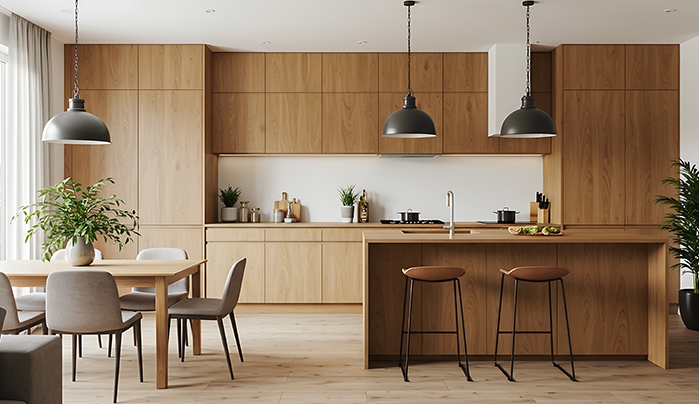
Strength, moisture and price grab the headlines. Finishing and installation quietly matter too.
In the end the right board comes down to more than budget. How long does the piece need to last? How hard will it be used and how much moisture will it see? Answer those and the choice usually makes itself.
The short version:
| If you need... | Choose |
|---|---|
| Lowest cost | MDF |
| Better moisture resistance | HDHMR |
| Highest strength | Plywood |
| Heavy furniture | Plywood |
| Decorative panelling | MDF |
| Kitchen cabinets | HDHMR or Plywood |
No single board wins outright. MDF, HDHMR and plywood each have a clear place and the choice keeps coming back to the same handful of questions: what's the furniture for, what's your budget, how much moisture does the space see and how long does the piece need to hold up? Match the board to those, be honest about what you actually need and check the spec sheet for the exact product before you commit. Do that and you'll finish with furniture that looks right and lasts.
HDHMR is denser than MDF and copes better with moisture, so for wardrobes, cabinets and humid rooms it's the stronger pick. MDF holds one advantage though: price. For furniture that won't face heavy moisture, it's still a smart, budget-friendly choice.
Plain, unbranded MDF isn't ideal for a kitchen. Better-quality MDF is water resistant, though and with a bit of care it holds up fine there.
By a decent margin, yes. Plywood's cross-laminated veneer structure gives it load-bearing capacity that fibre boards simply don't have. That's exactly why it's the default for heavier furniture and any structural work.
Plywood or HDHMR. Both take regular moisture better than standard MDF and picking between the two usually comes down to how much structural strength the cabinets need.
Loading categories...


