
Consumer
Choosing laminates for your interiors can be a tough decision to make. Selecting the design is only a small part of the process. Your HPL sheet thickness also matters because it can influence how the surface handles everyday use.
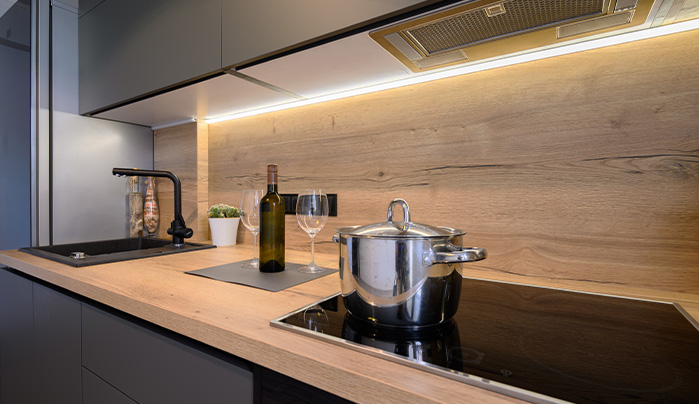
High Pressure Laminates are engineered for durability while giving you plenty of options for colours, textures, and finishes. From kitchen cabinets to office furniture, choosing the right thickness helps you balance appearance and performance.
How to choose the right HPL sheet thickness? Let us break it down for you.
A High Pressure Laminate, or HPL sheet, is a layered decorative surface material. It is made by compressing layers of kraft paper, decorative paper, and protective overlay under extreme heat and pressure. The result is a dense, durable surface designed to handle everyday use.
The components matter because:
This manufacturing process is a major reason why HPL sheets are known for their durability. CenturyLaminates uses special resins to provide enhanced strength and resistance to scratches and abrasion.
HPL is not simply about putting a decorative layer over a surface. Its construction is what gives it the strength needed for everyday interiors.
Here’s why HPL sheets can be a practical choice:
Depending on the product, CenturyLaminates also guarantee good performance against:
The HPL sheet thickness you choose should depend on where it will be used.
For CenturyLaminates, 0.72 mm, 0.8 mm and 1 mm are key thickness options across its decorative laminate range. The 0.8 mm Starline range, for example, is abrasion-resistant. The Lookbook range, on the other hand, offers various 1 mm HPL sheet thickness options.
Let us take a look at the benefits of HPL Sheets:
HPL sheets can fit into several interior applications. However, the laminate specification should suit the intended use.
Residential applications include:
Commercial applications include:
Selecting the appropriate HPL sheet thickness and performance specification is very important.
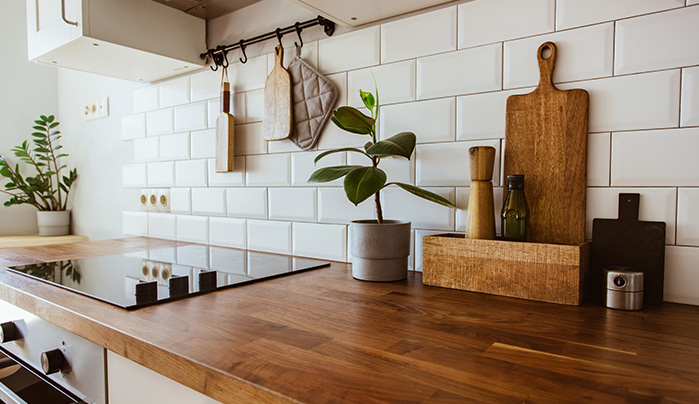
HPL sheet thickness is only one part of your decision. The right laminate should also complement the look and requirements of your space.
You can choose between gloss, matte, suede, and other finishes. A glossy surface can give a brighter look. On the other hand, matte and suede finishes create a softer finish.
Consider the room's overall colour palette before choosing your laminate. Neutral shades can create a subtle backdrop. Darker or brighter colours can become a design statement.
Textures can add another layer of character. CenturyLaminates provides woodgrain, fabric, leather-inspired, and other textured finishes for a more distinctive interior.
This is where the HPL sheet thickness becomes important. For standard furniture and cabinet applications, 0.72 mm and 0.8 mm are practical choices. For surfaces that face higher use, 1 mm may be better suited.
A good laminate can perform well if it is installed correctly. Let us take a look at what you should do and what to avoid:
Regular maintenance can help preserve the appearance and performance of your HPL surface for many years.
The HPL sheet thickness should match how the surface will be used. For many standard interior applications, 0.72 and 0.8 mm are practical choices. For surfaces that experience heavier use, 1 mm laminate may be a better option.
Pair the right thickness with the right finish, texture, and design. CenturyPly helps you create interiors that look great and are built for everyday living.
For kitchen cabinets, 0.8 mm laminate can be a suitable option for standard applications. For countertops, 1 mm HPL sheet thickness is generally a better choice. This is because these surfaces are used more frequently.
It is recommended to use a thicker sheet for surfaces that will experience higher levels of everyday use and impact. However, thickness should always be selected according to the specific application and laminate specifications.
CenturyLaminates provides options between 0.8 mm and 1 mm for decorative laminates. Some specialised laminate ranges may have other thickness specifications. So, it is important to check the individual product before making a selection.
You should choose the HPL sheet thickness based on how often the surface will be used. A 0.8 mm HPL sheet works well for standard cabinetry and furniture, while 1 mm is better for more frequently used surfaces such as countertops and desks.
Loading categories...


