
Consumer
Noise is the biggest disruption that you can have in a home. Sounds of laughter from the living room, sounds of TV, work in the kitchen, someone walking in the corridor, it can easily travel through bedrooms and disturb you. Privacy suffers when you don't put as much thought into your door construction as you should.
Here, flush doors enter the picture as a saviour. When they're made correctly, they can work as a functional barrier that helps you make a quieter, more controlled environment indoors. Hollow or poorly bonded structures won't do much for your sound control. A high-quality flush door is compact and structurally functional. Its internal composition, bonding quality, and how it's installed all have an effect on how well it will suit your household.
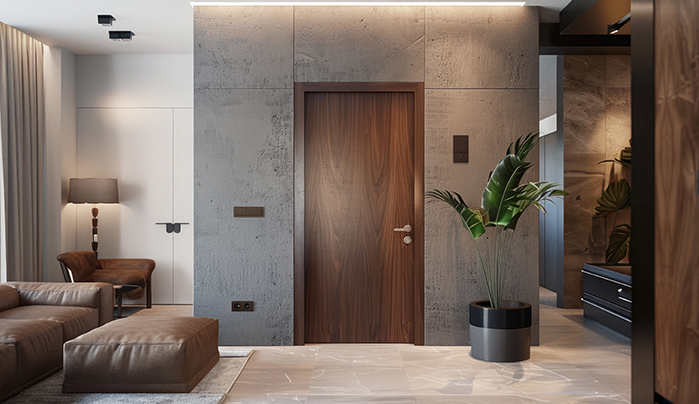
Sound control in your home begins with what's inside your door, and not just what looks good. It is the construction of a flush door that ensures that you get comfort and noise reduction. Here's how:
A denser core absorbs more and resists the sound. This happens because the added mass absorbs the vibrations and reduces them so that the transmission of voices or noise from the appliances, or even movement, is muted considerably. It's best if you want to have privacy in your bedrooms, and it even works well for offices.
If a flush door is made correctly, the layering on the inside is so evenly bonded that it controls the pressure. What we mean by that is, in poor construction, micro-voids usually form. These are the air gaps that help the noise to travel. If they're curved, that means you're getting soundproofing in a door, which will give you maximum privacy and comfort.
When you have stable layering inside the door, the drumming effect is reduced. This effect is when there are thin or loose layers built inside a door which vibrate like a membrane. Think of a drum and how it feels since it's hollow on the inside and very thinly layered on the inside. That is what you want to prevent with the door so that it can dampen the vibrations and contribute to a quieter environment overall.
It's not the middle of the door that's a problem, mostly. It's the perimeters where the sound leaks from, which is why you need strong reinforced edges which do not lose their shape and help prevent the noise from leaking through.
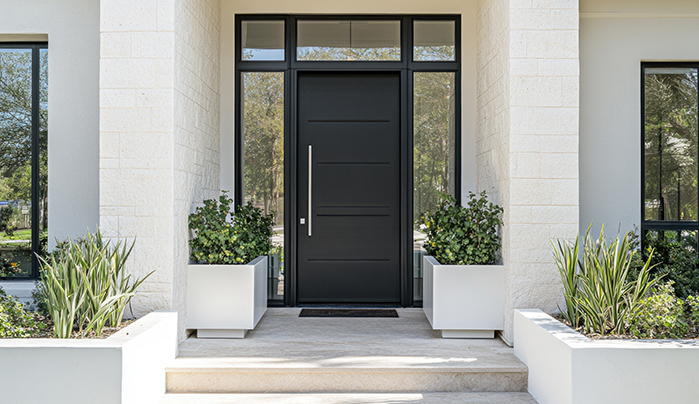
Even a well-built door cannot deliver privacy if installation and design choices are poor. Several structural and hardware-related elements influence how effectively a flush door seals a room.
A flush door must align accurately with its frame to prevent visible light gaps. Even small perimeter spaces allow sound to pass through easily. Proper sizing and skilled installation are essential for acoustic separation.
Acoustic privacy improves when soft seals or door sweeps are used at the edges and bottom. These reduce the air pathways that carry sound, especially in rooms facing busy corridors or shared living areas.
Incorrect hardware placement can distort door alignment over time. When hinges and locks are installed into reinforced sections of a flush door, the shutter maintains its shape and closes evenly, preserving both privacy and noise control.
Thicker flush doors generally offer better sound resistance because of increased material mass. For bedrooms and workspaces, selecting a higher-thickness shutter enhances acoustic performance compared to lightweight interior variants.

CenturyPly manufactures flush doors using controlled processes that support long-term structural stability and better acoustic performance in residential spaces.
CenturyPly flush doors are made using seasoned timber and calibrated core constructions that maintain density throughout the shutter. This balanced structuring helps reduce vibration and gives better resistance to airborne sound transfer.
Advanced bonding techniques are used so that the internal layers stick firmly. This lessens internal separation over time, which could otherwise make sound paths or surface resonance. The result is a door that gives the same, uniform performance even after years of wearing down.
We also have variants compatible with laminates and veneers without affecting the structure. A properly bonded decorative door does not interfere with acoustic performance, letting you, as a homeowner, maintain design continuity while retaining functionality as well.
Flush doors are the solution to quieter and more private homes when done correctly. Core density, internal bonding, surface stability, and edge precision all have an impact on how effectively a door controls sound. Put together with proper framing and sealing, flush doors make a proper separation between active and rest spaces inside a house. CenturyPly flush doors are provided in all areas. Invest now, enjoy for a long.
High-quality flush doors with dense cores generally provide more uniform sound resistance because of their continuous internal structure.
Greater thickness often improves sound resistance, but core density and bonding quality are equally important factors.
Yes. Seals reduce air gaps around the door edges, which are common pathways for sound leakage.
No. Performance varies by construction. Solid or high-density engineered cores provide better noise control than hollow options.
Loading categories...


