
Consumer
Marble has a way of making a room look finished. And why not? There is something about those flowing veins and polished surfaces. The trouble starts when you think about using natural marble everywhere. It can be heavy. It needs careful handling. Some varieties are porous and may need more attention than you expected.
Marble acrylic sheets for kitchen and bathroom offer a different route. They bring the familiar veining and polished appearance of marble into an engineered surface that is lighter and generally non-porous. That makes them worth considering for spaces where water, spills, cleaning and everyday use are unavoidable. Let's look at them in detail here.
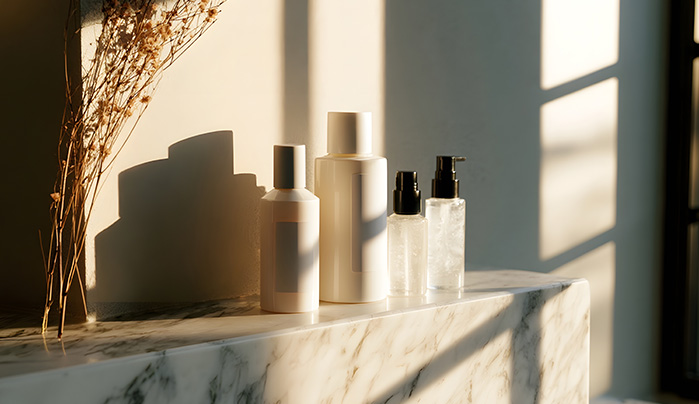
They're solid panels made from acrylic resin mixed with mineral fillers and pigment. In marble versions, the veining runs through the sheet instead of sitting on top as a printed layer. Scratch it, and you don't suddenly see a different colour underneath.
You get them in standard sheet sizes, roughly 3mm for cladding and up to 12mm or more for a countertop, in gloss, matte, or textured finishes. They are also much lighter than stone. That makes handling and installation easier in many interior applications. The result? You get the marble-inspired appearance without making the entire design revolve around the weight and upkeep of natural marble.
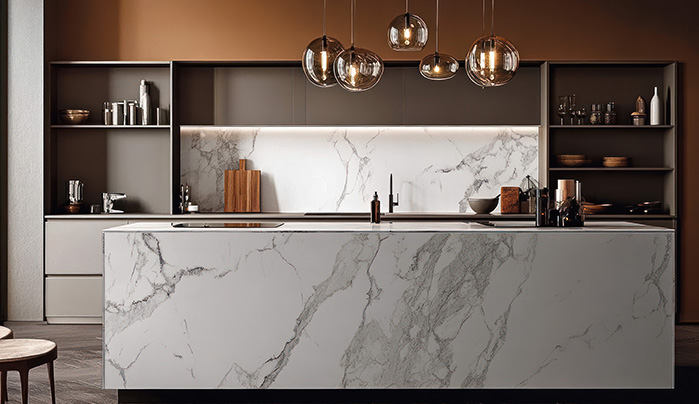
It's not simply because they look like marble. It is a mix of appearance and practicality.
Natural marble has plenty going for it, but it also comes with considerations such as weight, sealing and maintenance. Marble-look acrylic surfaces can offer the visual character people want while being easier to handle and maintain in many applications.
A large marble slab is not something you casually move around.
Acrylic sheets are lighter. This can make transportation, cutting and installation easier, particularly when the design involves larger panels or multiple surfaces.
That does not mean installation should be treated as a DIY job for every application. Proper fabrication still matters.
Water is unavoidable in a kitchen or bathroom.
A generally non-porous acrylic surface does not absorb moisture like porous natural stone. This is one reason acrylic surfaces are commonly considered for bathroom walls, vanity areas and kitchen applications.
For wet areas, however, the sheet itself is only one part of the equation. Edges, joints, substrates and installation need proper attention too.
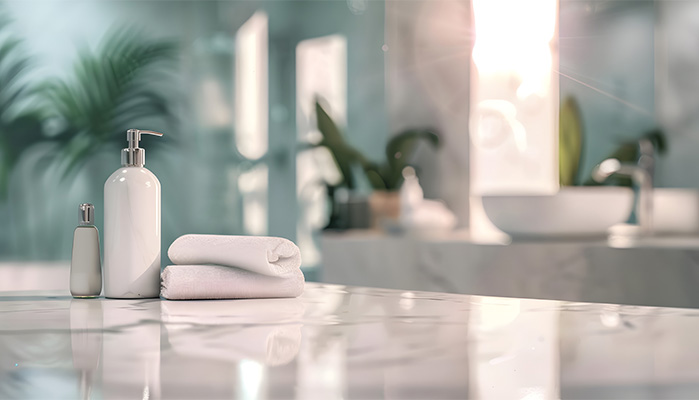
Nobody wants another high-maintenance surface at home.
Routine cleaning usually involves a soft cloth and a suitable mild cleaning solution. Avoid harsh chemicals and abrasive pads unless the manufacturer specifically recommends them.
That makes the material fairly convenient for surfaces that need regular wiping.
This is where marble acrylic sheets can be fun to work with.
You are not restricted to one type of marble. Different colours, vein patterns and finishes are available. A subtle white-and-grey pattern can keep a small kitchen looking light. A darker design can bring contrast to a neutral bathroom. The choice can be based on the room rather than the limitations of a particular stone slab.
Two sheets get bonded with colour-matched adhesive, then sanded flat. Done by someone who knows what they're doing, you can run your hand over the join and feel nothing. Stone always shows a line, however carefully it's fitted, and that line collects grime over the years.
Scratches and dull patches can be polished out where they are. No removal, no specialist for small stuff. Marble doesn't work that way. Chip an edge, and it stays chipped, and a deep stain often means replacing the piece.
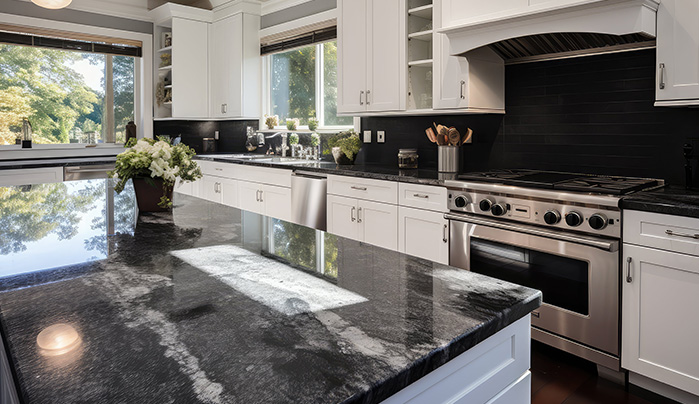
Most people first hear about these sheets in the context of a kitchen counter, and then stop there. That is not accurate because the same properties that make them work on a countertop make them useful in a handful of other places. Here's where they genuinely make sense.
Kitchen Countertops
The obvious one. Oil, turmeric, tomato, vinegar, coffee; all of them stain stone if left sitting. On acrylic, they
wipe off. You can also run marble acrylic sheets for kitchen counters straight up
the wall as a backsplash with no visible join, which is expensive and ugly in stone.
Backsplashes
Anyone who has scrubbed grout behind a stove knows how that ends. Dark, greasy, past saving within a year. One
panel, no grout, no problem.
Bathroom Vanities and Wall Panels
Constant damp ruins bathroom surfaces, not one big spill. Wood swells, laminate
lifts, stone discolours near the tap. Nothing gets absorbed here, so none of that happens.
Shower Walls
Tiles mean joints, joints mean grout, and grout in a shower means mould sooner or later. Two or three full-height
panels take most of that away. Less scrubbing, mainly.
Cabinet Shutters and Wardrobe Fronts
Thinner sheets suit this. A 3mm or 6mm panel gives you the finish without loading the hinges, and it ties the room
together cheaply.
Commercial Spaces
Reception desks, hotel bathrooms, restaurant tables, and retail counters see heavy use and are cleaned regularly,
several times a day. When something does mark, it polishes out on site instead of closing the place down. Go thicker
here, and check the fire rating if the building needs one.
Choosing the prettiest pattern is tempting. It should not be the first or only decision.
Where will the sheet actually go? A bathroom wall, kitchen backsplash and countertop have different requirements. Tell the supplier the intended application and ask whether the specific sheet is recommended for it.
Thickness can affect stability, handling and suitability for different uses. Don't assume a thicker sheet is automatically better for every situation. Follow the manufacturer's recommended specifications.
Get a physical sample if possible. Place it beside your kitchen cabinets or bathroom tiles. Look at it in daylight and artificial light. A pattern that looks delicate on a phone screen can look much stronger when repeated across a large surface.
Ask about moisture resistance, stain resistance, scratch performance, impact resistance and heat tolerance. These details matter far more than the finish name.
Good material can still give a poor result when installation is rushed. Ask about the recommended adhesive, substrate, edge treatment, joints and fabrication method. For large surfaces, professional installation is worth considering.
A good surface should look good without becoming another thing to worry about. Marble acrylic sheets offer that balance, bringing marble-inspired patterns into kitchens and bathrooms while keeping everyday care fairly simple. The important part is choosing a sheet that suits the space. Check its specifications, understand how to maintain it, and use it as recommended. That way, the finish can keep its appeal well beyond installation day.
Stains and moisture, easily. Nothing is porous, so there's nothing for a stain to grip. Scratches are the honest weakness. It's softer than granite or quartz, so if you drag a knife across it, you'll see the mark. The upside is that the mark can be buffed away, which you can't do with stone.
Both, and they're used plenty in each. Homes get the cost and the low maintenance. Commercial projects get seamless joins over large areas and a surface that can handle being cleaned three times a day. For commercial work, go thicker and check the fire rating if the project calls for one.
These are the two rooms where they work best. Kitchens, because oil and food stains wipe off rather than sink in. Bathrooms, because damp doesn't damage the material and there's no grout for mould to settle into.
Good sheets, installed properly, comfortably past ten years and often a lot longer. What cuts that short is almost always cheap material or a rushed installation, not the surface wearing out.
Loading categories...


