
Consumer
Do you think that all “woods” used in interiors are the same? Well, they are not! The elements behind that polished finish or laminate finish can change the look and feel of your furniture over time.
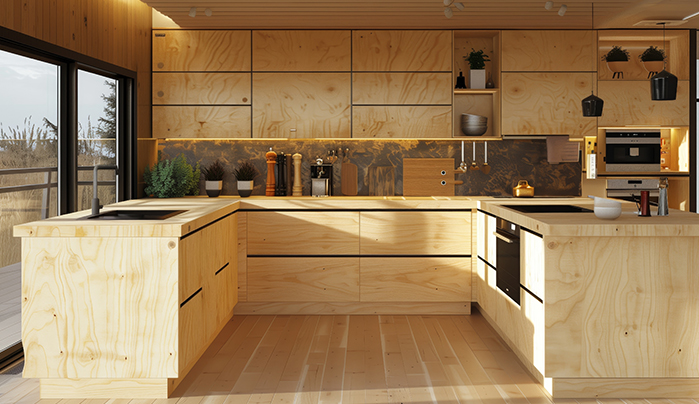
Whether it is about swells, cracks, attracting pests, or holding its strength, the knowledge about engineered wood vs plywood is quite essential for everyday living. Therefore, read this blog to understand the core differences that can shape your decisions. After all, a material cannot be experienced in a showroom; it can be experienced on a hot and humid afternoon in June or during a kitchen spill.
When looked at from afar, both materials look the same after finishing. However, they are constructed quite differently, and the differences can be observed in performance.
The term engineered wood is a blanket term that is used to describe materials such as MDF (Medium Density Fibreboard), HDF and particle board. They are manufactured by pressing wood fibres, chips, or sawdust using adhesives in the presence of heat. It is cost-effective, efficient, and operates in controlled conditions. The catch? It is glued a lot and is uniform in density instead of depending on the natural strength of the wood grain.
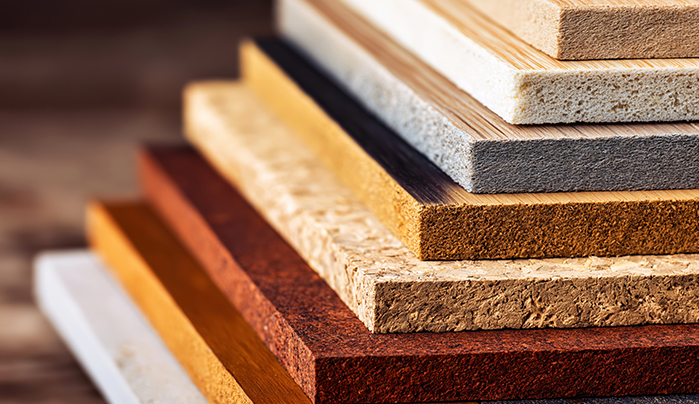
Engineered wood covers different products, each designed for a different purpose. The performance you get from a wardrobe, study table, or decorative panel often depends on which type of engineering wood is being used underneath the finish.
MDF is made by compressing fine wood fibres into dense panels, creating a surface that is easy to shape, paint, and customise. MDF is commonly used for decorative furniture, wall panelling, and design-focused interior elements.
HDF follows a similar manufacturing process but is compressed further to achieve a higher density. The result is a board that feels tougher and more durable.
Particle board is produced using wood chips and particles bonded together with adhesives. Its affordability has made it a popular choice for modular furniture and budget-conscious interior projects.
A product produced by the bonding of thin sheets of natural wood veneer, plywood features grains that are oriented in opposing directions. This cross-grain design is what makes plywood strong, stable, and able to resist bending or breaking. It is less about compression and more about structural engineering.
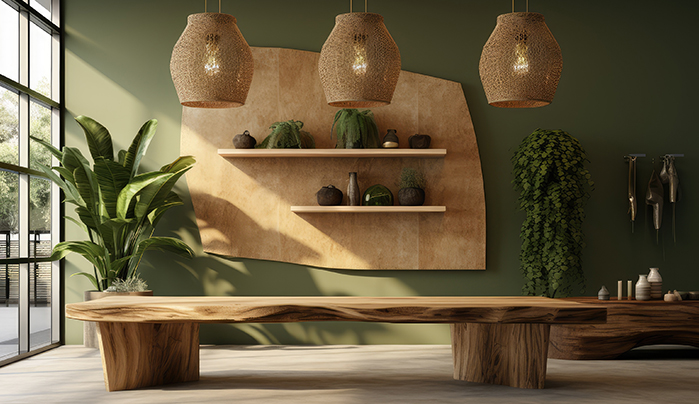
Plywood may look similar on the surface, but not every plywood sheet is built for the same environment. Different grades are developed to handle different levels of moisture exposure and usage conditions.
Moisture Grade plywood, often referred to as commercial plywood, is widely used in interior spaces where direct exposure to water is not a major concern.
BWP Grade plywood is designed for spaces where demand is more than basic moisture resistance. Kitchens, utility areas, and bathrooms face regular exposure to humidity, spills, and water vapour. BWP plywood, offering a much higher level of water resistance and long-term durability.
Marine plywood is built for environments where moisture is not occasional but constant. Manufactured using carefully selected veneers and waterproof bonding systems, it is designed to maintain its strength even under challenging conditions.
You will not notice the difference on day one.
You will see it when:
The swelling begins near the sink on one of the cabinets.
A shelf starts to be weighed down.
A piece of furniture silently lingers for decades.
Engineered wood vs plywood - It is not regarding which is better or worse. It is about where which material works and where it does not.
There is a specific place for engineered wood. The issue starts with its application without considering exposure, load, and life cycle.
Less expensive and easier to machine. This means - less toxic laminates and paints, no grain variation in surfaces, and faster production cycles. It effortlessly serves the purpose of low-end or short-term arrangements.
Engineered wood is suitable due to its density and consistency. Painted furniture, decorative panels, and wall cladding with no moisture - engineered wood is the choice. It is predictable and is a favourite among designers.
Here things can get a little tricky. Moisture and engineered wood are not compatible. Where there is a lot of humidity or spills, wood can swell, its edges can bubble, and the internal structure will get weaker with time. When all of these occur, there is no chance of repairing the engineered wood and bringing it back to its original shape.
Excessive weight in the long term? Not its strength. Bookshelves, kitchen cabinets and wardrobes need materials that can support a constant weight without bending. And engineered wood can be a strong choice; however, it has less compatibility for long-term use.
Engineered wood is often used in rental homes, temporary interiors, and budget renovations. It does not necessarily require decades to be constructed. And this is all fine - if that is what you intend.
Plywood does not necessarily receive the limelight as it is placed underneath the surface. Nevertheless, it is the reason why your furniture is still functional years later.
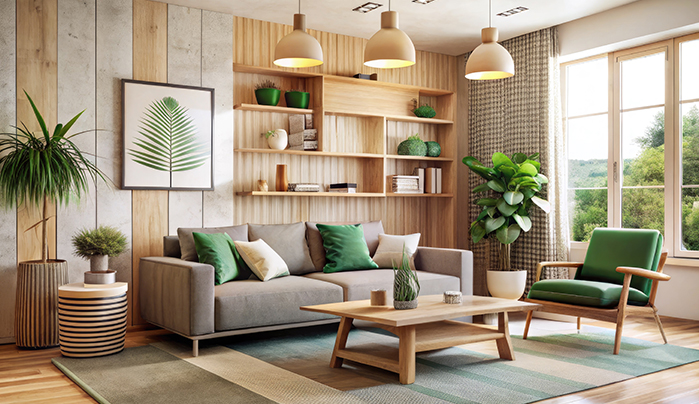
Plywood has a cross-layered structure. This makes it resistant to warping, cracking, and bending under load. It is the reason why it is relied on in major applications, such as wardrobes, kitchen cabinets, and beds. The products like CenturyPly Club Prime are designed to deliver the same strength for decades.
Not every plywood is the same, but quality choices like BWP (Boiling Water Proof) plywood are used in places where exposure to water is unavoidable. Kitchens, bathrooms, and utility areas - the CenturyPly Sainik line of CenturyPly is commonly employed in areas where durability is combined with affordability. It provides a high degree of resistance compared to the conventional engineered boards.
This is what most people do not pay attention to. Good plywood is not only strong, but it has armour within. CenturyPly incorporates technologies, such as Virokill (anti-bacterial, anti-fungal protection), rorer and termite-resistance, and fire-retardant capabilities. For example, CenturyPly Architect Ply is developed for areas where structural integrity and safety are also important.
Yes, plywood is more expensive in the short run. But over time, it demands fewer repairs and less replacement with no compromise on performance. Thus, it is a cost-efficient option. Since cost is not the only factor in replacing a swollen cabinet, it is more about disruption.
The difference between engineered wood vs plywood is experiential. It is the difference between furniture that ages gracefully and furniture that quietly starts failing. Engineered is efficient, cost-effective, and works well in the right conditions. But when it comes to strength, moisture resistance, and long-term reliability, plywood is a go-to for core applications. Because at the end of the day, good design is about how it performs when life happens.
No! It works well for low-moisture and low-load applications.
Plywood uses natural wood veneers and a more complex construction process, which makes it stronger and more durable.
A high-quality BWP-grade plywood is designed to resist moisture, making it suitable for kitchens and bathrooms.
Loading categories...


